When Disney acquired Pixar in 2006, they weren’t just acquiring a multi-award winning animation studio they acquired an ethos of learning and achieving through dedicated research.
Before each of Pixar’s movies it has become somewhat of a tradition that they show an animated short before the film. Not only are these shorts Academy Award winning five minutes bundles of joy but they are research projects for technological advances for subsequent releases, for instance; take the endearing animated character in Geri’s Game, he was designed to "take human and cloth animation to new heights"; the water in Boundin’ was to showcase the new reflective techniques to be used in Cars; the feathers in For the Birds were a design challenge that needed to be overcome for Monsters inc… the list goes on.
Pixar supremo John Lasseter said of these shorts: “From ‘Geri’s Game’ onward, the short films were helping to develop our talent [and] helping continue the research and development at the studio,”
Pixar encouraged their staff to play around with real world objects and put them into their animation work, recording their findings as proper academic research. The dedication to research is just one of the plethora of reasons Disney sort to acquire the company whose films they had helped distribute for over a decade previously.
Two years after the acquisition the philosophies of Pixar had influenced Disney sufficiently that they decided to launch Disney Research in 2008 in order to “research novel technologies and deploy them on a global scale”. Those novel technologies are vast and varied but there is one technology that keeps cropping up in a decent percentage of the studies, of course it is 3D Printing.
In the last year Disney Research have presented no fewer than eight projects that have involved 3D printing in some shape or form, with two of those coming in this last week.
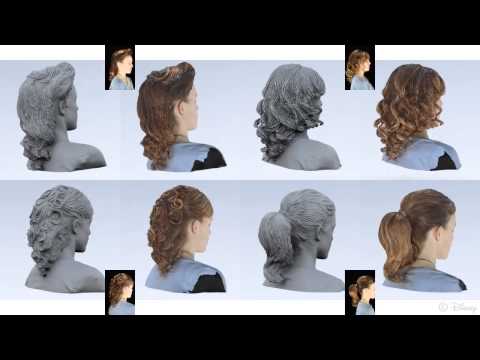
One of the new projects Disney Research has aimed to tackle the lack of individual hairstyles in 3D printed mini-me models. Often though the face capture of 3D scanning is spot on, particular hairstyles and colour have been left wanting when the model is printed.
“Stylized Hair Capture” is a method that generates individual hairstyles by introducing three new steps after scanning has taken place; Colour Initialisation, Colour Stylisation and Geometry Stylisation. This algorithim as can be seen from the video mean a person’s hair is perfectly rendered and printed.
Although this may seem a somewhat frivolous piece of research, given that Disney have installed a scanning and printing service in their theme-parks, one could surmise that the feedback from the Star Wars models has been disappointment in the reproduction of the hair. Disney Research to the rescue.
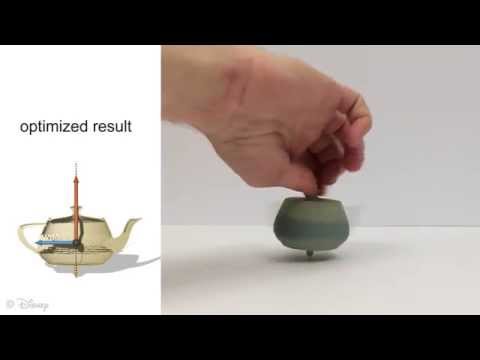
Another of the Disney Research 3D printing projects we’ve seen published this week is an algorithm that can make anything into a spinning top. In a similar method to that of the “Make it Stand” project, the Spin-It project redistributes weight in a 3D print’s infill to make it perfect spinning fodder.
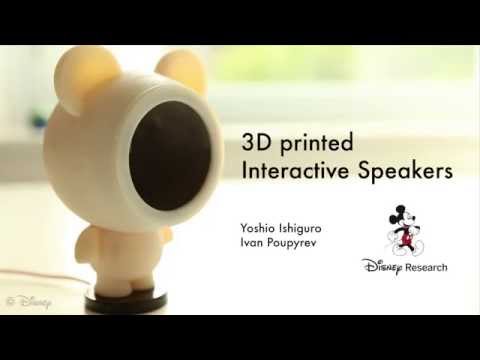
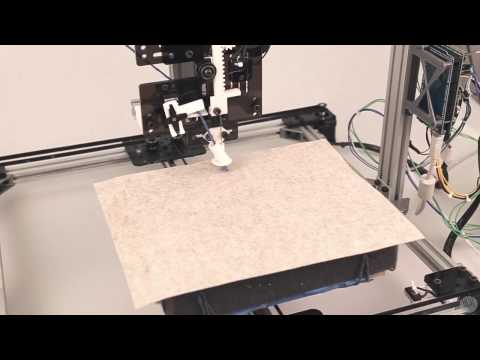
These two projects along with the other six in the gallery above show Disney are taking this technology very seriously, exploring ways to implement it at the Magical Kingdom or to top up the considerable revenue from official merchandise.