Back in Shenzhen for TCT’s second edition in the Southern City of electronics and innovation, the last one was six year ago thanks in no small part to a global pandemic.
First thing to note is Shenzhen isn’t the challenger anymore. It’s the stage. A city that made its name on consumer electronics is now setting the pace in additive manufacturing.
Formlabs saw this before most. While some in the West fretted about IP theft, Formlabs set up shop here and plugged into the ecosystem. The bet has paid off. Their Shenzhen headquarters has doubled in size in just six months. They’re finding new skills in the Shenzhen market that aren’t just keeping them ahead of the pack they’re taking an unassailable lead in desktop vat photopolymerization.
Despite an array of cheaper resin machines, none come close in reliability or brand strength as Formlabs and their latest Form 4, which is live printing on the show floor. The sight of dental arches, medical models, and precision jigs printing in real time made their booth feel less like a trade show stand and more like a working lab. That’s what pulls the crowds.
It’s easy to fall into the narrative that Chinese buyers simply back Chinese brands out of loyalty, Formlabs shows that the market buys reliability and quality. Companies like Bambu Lab and Creality win in desktop material extrusion not just because their machines are cheaper but because their machines deliver. Bambu Lab’s line of high-speed material extrusion systems has raised the bar on throughput and surface finish. Creality, the long-time workhorse, continues to move units because their printers are reliable, affordable, and endlessly hackable. Customers don’t care about the flag on the box. They care that the part comes out right, every time.
Snapmaker is another story altogether. Their toolchanger platform combining material extrusion, CNC milling, and laser engraving didn’t just raise eyebrows, it raised millions. Their Kickstarter campaign smashed records, pulling in over $8.5 million. That energy was obvious on the floor in Shenzhen. Their stand was so busy it was almost impossible to get a clear photo. Crowds three-deep pressed in to watch the machines switch between printing, milling, and engraving in one build chamber. For a brand born online, the real-world presence was striking.
And it’s not just a handful of brands pushing. The official TCT Shenzhen new product catalog lists 105 products. That’s only scratching the surface. The sheer density of launches tells you this isn’t a region waiting for permission to lead it already is.
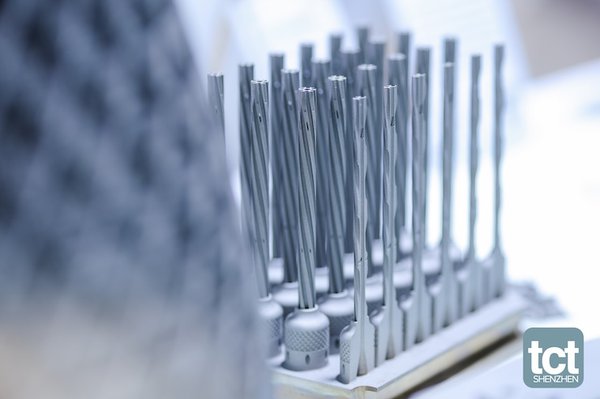
On the industrial side, AMPro brought its large-format powder bed fusion (PBF-LB/M) systems, multi-laser platforms capable of building structural titanium and nickel parts for aerospace and energy. Their story is one of the most interesting stories on the show floor but there is a parallel between Board Chairman, Prof. Xinhua Wu’s career and the growth of the TCT brand. Both have roots in Birmingham and from those little acorns have grown mighty trees in China. Prof. Wu’s story is one you’ll have to wait to read on TCT going forward.
Get your FREE print subscription to TCT Magazine.
Exhibit at the UK's definitive and most influential 3D printing and additive manufacturing event, TCT 3Sixty.
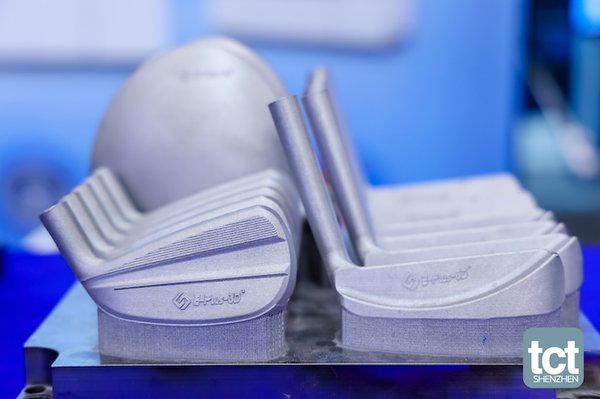
Elsewhere, Fast Form rolled out its latest metal PBF machines too, configured for production-line deployment in aerospace, medical, and tooling applications. EPlus showed a broad range, from polymer powder bed fusion for functional prototypes to full-scale metal powder bed fusion systems, a reminder of their longevity and versatility in this market.
ZRapid made the point visually, running live builds of meter-scale polymer parts on its stereolithography platforms, the kind of scale that grabs attention even in a hall packed with machines. One enormous booth is that of J@LC, a company we (the UK team) were largely unaware of, is one of the largest OEM bureaus in China. Tens of thousands of metal and polymer parts leave their floors each year, feeding the supply chains of other machine makers as well as end-users.
And yes, there’s still that one thing that never fails to make me at a 3D printing show: the IP infringed crowd-pleaser print. Once it was Yoda busts. In Shenzhen it’s the Labubu. My only advice to companies? Don’t lean too hard on them. Show the real parts. That said, if a Labubu gets a crowd to stop, and then you hit them with an engine block or a flight-ready bracket, maybe you’ve cracked the code. What do I know?
Day One in Shenzhen is a reminder that this industry here is not catching up, it’s already leading. From Formlabs’ refined resin to AMPro’s 16-laser powder-bed fusion, the message is clear. Shenzhen has everything from crowd-pleasing desktop to production-ready metal, and the world would do well to pay attention.