3D scanning technology has been put to use in the heritage and conservation sectors, and in medical, industrial and inspection sectors for years - and now scanners are being employed to fight crime.
Queensland Police Service in Australia is investing in world-leading technology that reduced the time it takes to map a crime scene.
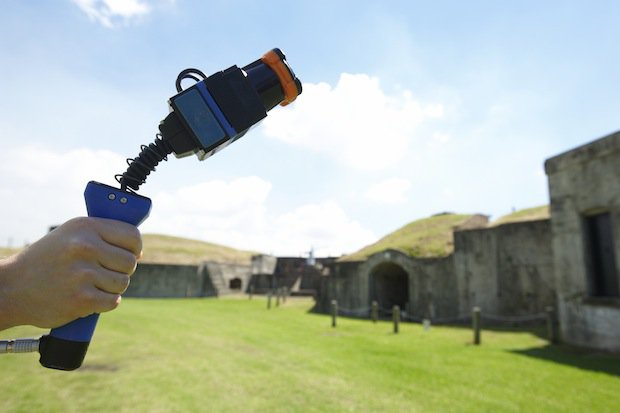
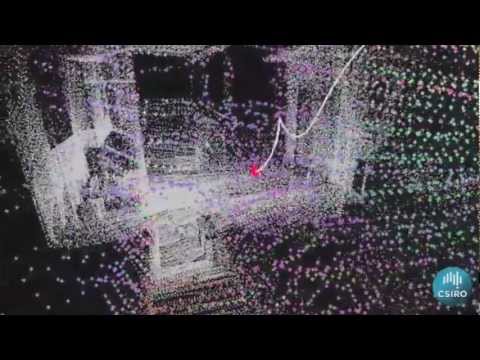
Minister for Police, Fire and Emergency Services Jack Dempsey revealed yesterday (February 13th 2014) that the CSIRO-developed Zebedee 3D scanner allows operators to walk through a crime scene and capture data to generate a 3D map in around 20 minutes.
Queensland Police Commissioner Ian Stewart said regional police there are the first in the world to use this kind of technology in law enforcement, after it was originally developed for mapping mines and caving.
"The benefits of this new technology will reduce interference at a scene, save time and allow access to previously hard-to-reach areas such as step declines and bushland. This cutting-edge technology is allowing us to adapt to a new environment of ongoing change and improvement. We look forward to continuing our working relationship with CSIRO to explore new technology that will benefit our officers in their duties," Commissioner Stewart said.
Named after the springy character from the well-loved children's television programme The Magic Roundabout, CSIRO (the Commonwealth Scientific and Industrial Research Organisation) developed the technology at its Queensland Centre for Advanced Technologies, which was visited by Science, Information Technology and Arts Minister Ian Walker last year.
He said: "Zebedee demonstrates how research and technology moves from the lab into commercialisation, with real and positive benefits for Queenslanders.
"The Newman Government recognises how important the ongoing development of talent in the science sector is, which we've demonstrated with the injection of 8.75 AUD million (£4.73 million, $7.9 million) in the Accelerate program through the Science and Innovation Action Plan and our 42 million AUD commitment to the Australian Institute of Tropical Health and Medicine in North Queensland. Zebedee is another example of Queensland’s strength in science and innovation."
Minister Dempsey added that the government made a pledge to "revitalise frontline services" by adopting leading-edge technologies that will help officers do their duty, protecting the people of Queensland.
He stated: "The Zebedee Scanner is primarily being used by Forensic Services to map crime scenes but has the potential to be used by the Forensic Crash Unit."
Dr Jonathan Roberts of CSIRO's Computational Informatics department said the company's mission is to continue to find new ways to improve Zebedee and how it can be used, describing using the technology like "a walk in the park".
"The latest research version contains a video camera to provide imagery on top of the 3D laser information. We're very excited to see our home-grown, Eureka Prize-winning technology being used to help assess crime scenes - a new addition to what seems to be an ever-expanding number of applications. The 3D data visualisations that Zebedee creates provide a wealth of spatial information quickly and easily," he said.