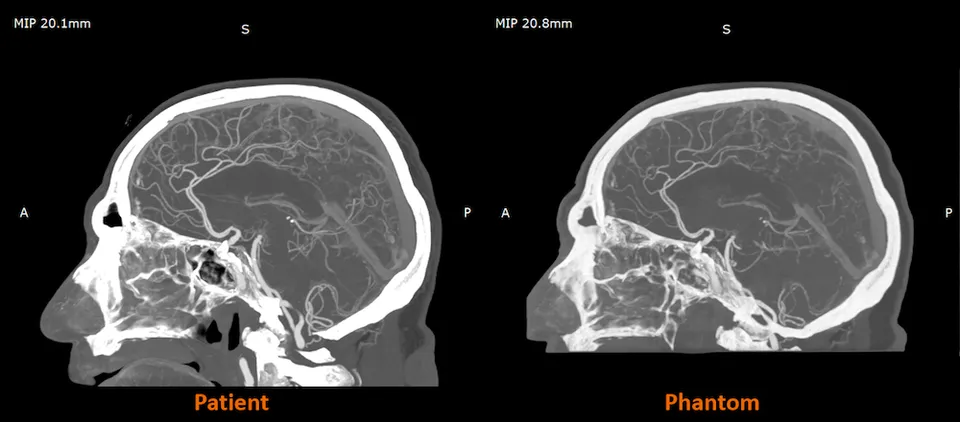
A plastic surgeon in Istanbul is using 3D technology to scan his clients’ faces to show what they will look like after surgery.
Using Artec Eva and 3D print masks, potential customers will be able to see what they are paying for before they go through with the transaction.
Dr Yukup Avsar, the founder of AVSAR Aesthetic Surgery Clinic, has opted to include the service because of a number of practical advantages. It not only supplies patients with an accurate reflection of their looks post-op, but it also sets realistic expectations for the patient and the limits of surgery, and serves as a helpful three-dimensional point of reference for doctors.
In his practice, Dr Avsar combines Artec 3D scanners’ high precision imaging solutions with the swiftness of additive manufacturing. Using these techniques, a material can quickly be constructed and a tangible estimation of how a patient will look after undergoing facial surgery. The process has so far been met with approval.
“It is what the patients want,” said Dr Avsar in a recent interview with Digital Engineering. “Before this, it wasn’t possible for us to show patients exactly what their face would look like following surgery. Enabling them to see and feel the realistic three-dimensional mask of their face gives patients a far greater understanding of the surgical results they can expect. This technology is powerful for patients in everyday practice.”
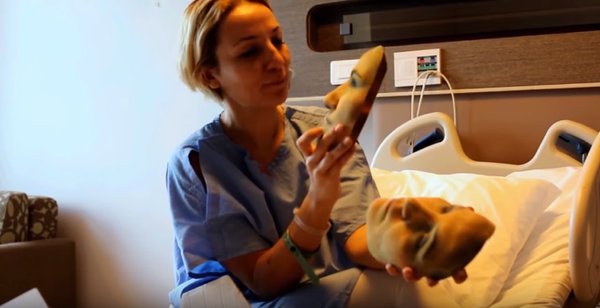
Equally, the technology also benefits doctors. 3D scanning has revolutionised the method of Dr Avsar’s mask-making. Before he introduced Artec’s Eva handheld 3D scanner, he sculpted the masks by hand. His old method was much more time-consuming and laborious. Additionally, the final handmade facial models often went without key details, such as colour and texture, which could have been of great value to patient and doctor.
The reconstructive surgeon decided to alter his method after witnessing a demonstration of 3D scanning and printing technologies by Artec’s Gold Partner Teknodizayn. He immediately sensed the advantages of their combination could prove gainful to his patients.
Prototypes rendered from the process would be incredibly realistic and the experience of seeing and feeling the mask allowed for patients to make much more informed decisions. In turn, surgeons are able to skip the cumbersome chore of moulding some malleable material into some semblance on a patient’s face altogether, and perfect their operations.
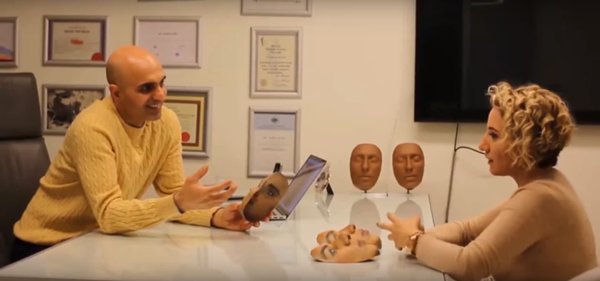
In the early days of using the method, Dr Avsar used powder-based techniques, but later moved on to a Mcor 3D printer for its advanced colour capabilities. Operational costs and the well-being of the environment also played a role. Dr Avsar claims his surgery always prefer to use eco-friendly, stable and economic 3D printers.
Using the Artec 3D scanning and Mcor 3D printing, Dr Asvar is creating around 20 unique masks a month, with much of the work now taken up by the Eva scanner.