

The BMW Group has reinforced its commitment to additive manufacturing (AM) as it looks towards the future and the implementation of AM across all phases of its vehicle life cycle.
According to a new Q&A with BMW Group's Head of Additive Manufacturing Timo Göbel, who came on to lead its Additive Manufacturing Campus (AMC) in Oberschleißheim last year, BMW Group is said to be continuing its investment strategy in AM and is "actively shaping the transition of additive manufacturing into a fully integrated and widely established production technology – both technologically and organisationally."
3D printing has been a significant part of the German automaker's toolkit for some time. It was the recipient of EOS's first Stereos 400 system all the way back in 1990. It's now used to build components in series production vehicles across all of its brands, starting with polymer brackets for the Rolls‑Royce Phantom in 2012 and metal components for the BMW i8 Roadster in 2017. Since opening in 2020, more than 1.6 million components have been manufactured at the AMC, with more than 100,000 components produced at vehicle plants worldwide annually. It is also actively embedding AM expertise and training across the organisation to "create the foundation for sustainable scaling throughout the entire company."
Göbel said the company is "clearly on track toward the broad industrialization of additive manufacturing." Speaking about its adoption across the BMW production network, he shared that AM is becoming an "increasingly important tool for fast, flexible, and technically advanced development processes", while newer technologies like Wire Arc Additive Manufacturing (WAAM), which BMW began exploring in 2024, are enabling the production of larger components in higher quantities.
Göbel provided a further update on BMWs integration of WAAM, which is currently undergoing transfer into series production for the production of large‑format components. Vehicle testing is said to have been underway since 2025, and series production of the first components is expected to commence in 2027.
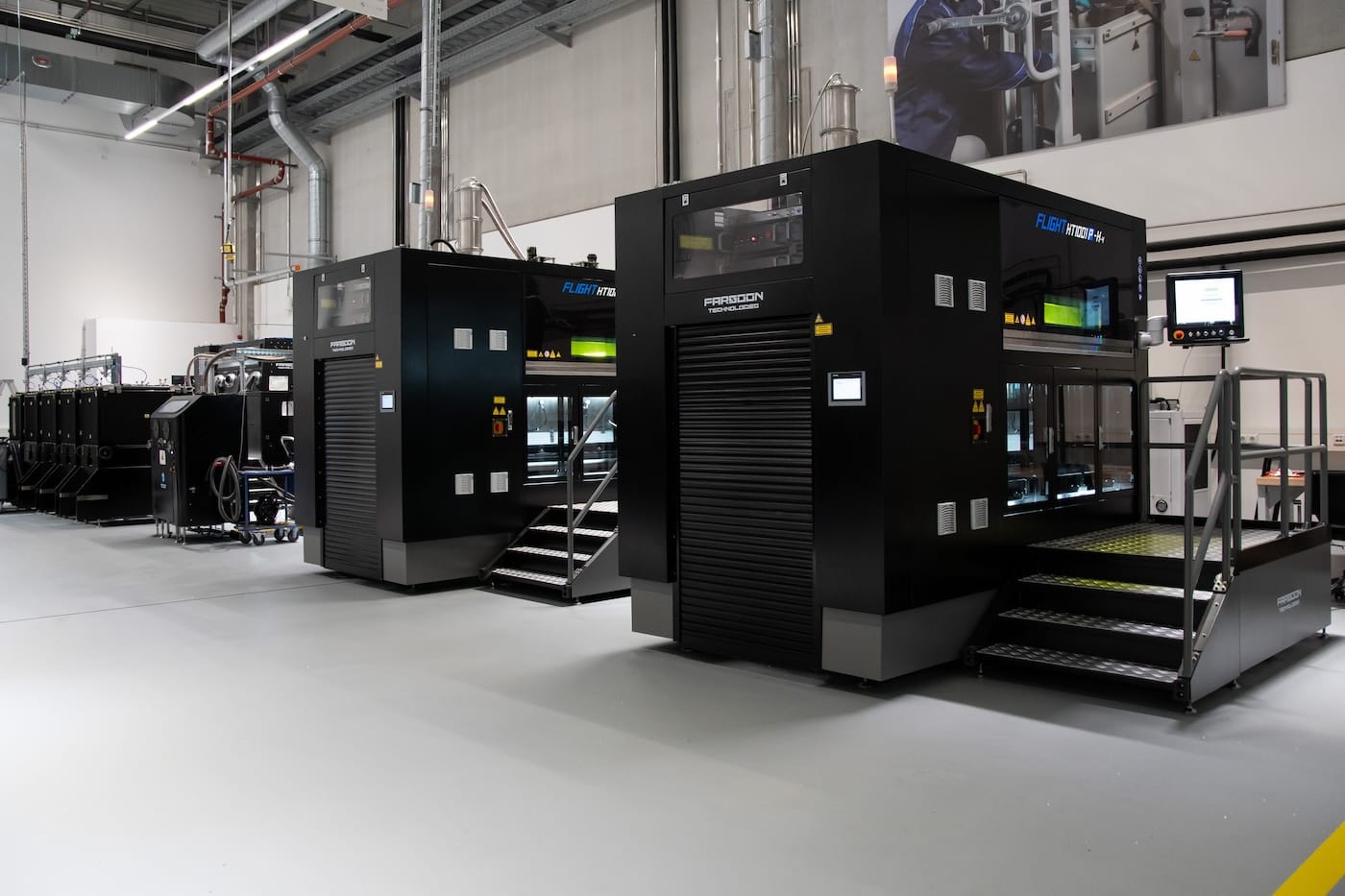
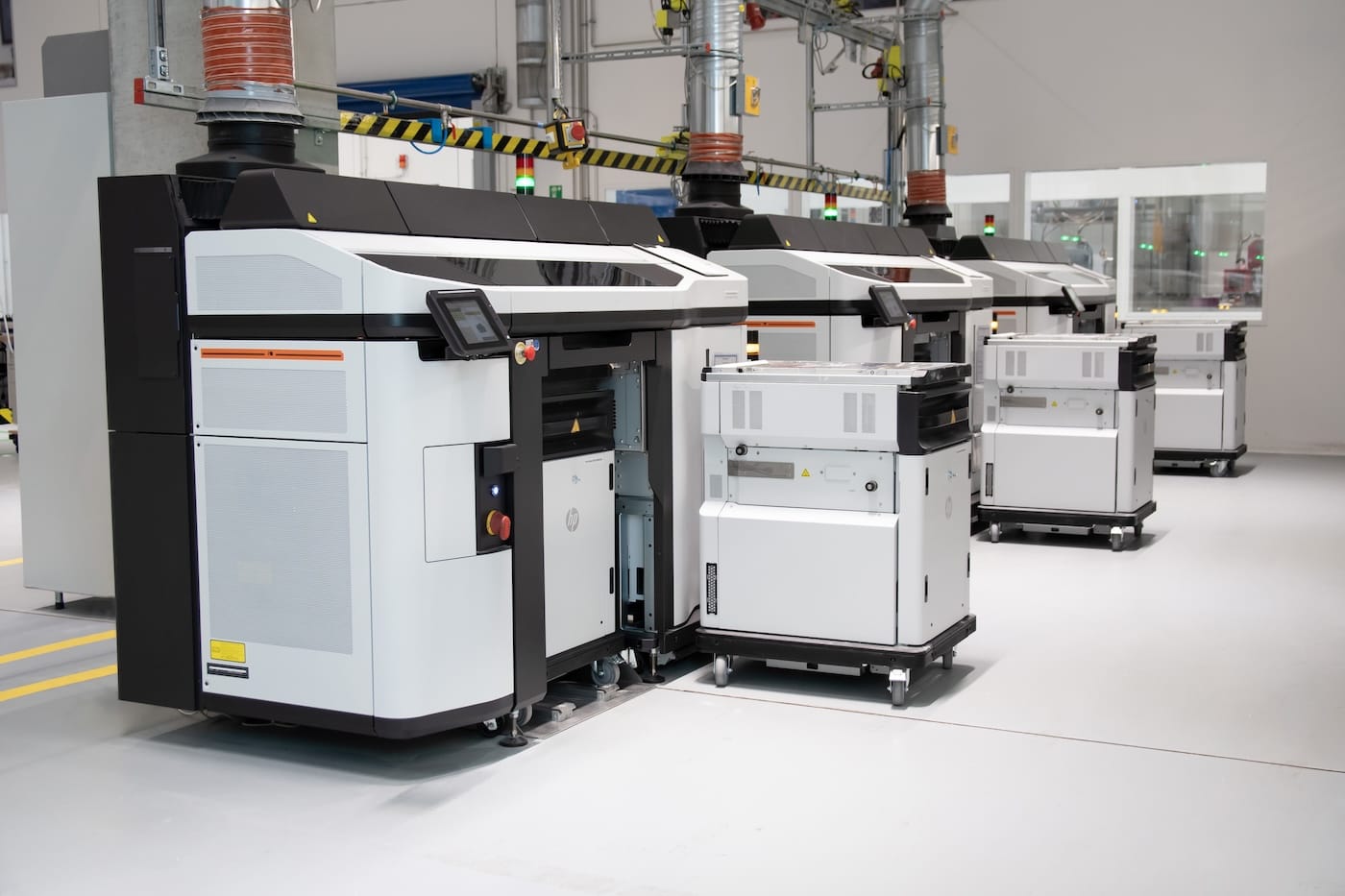
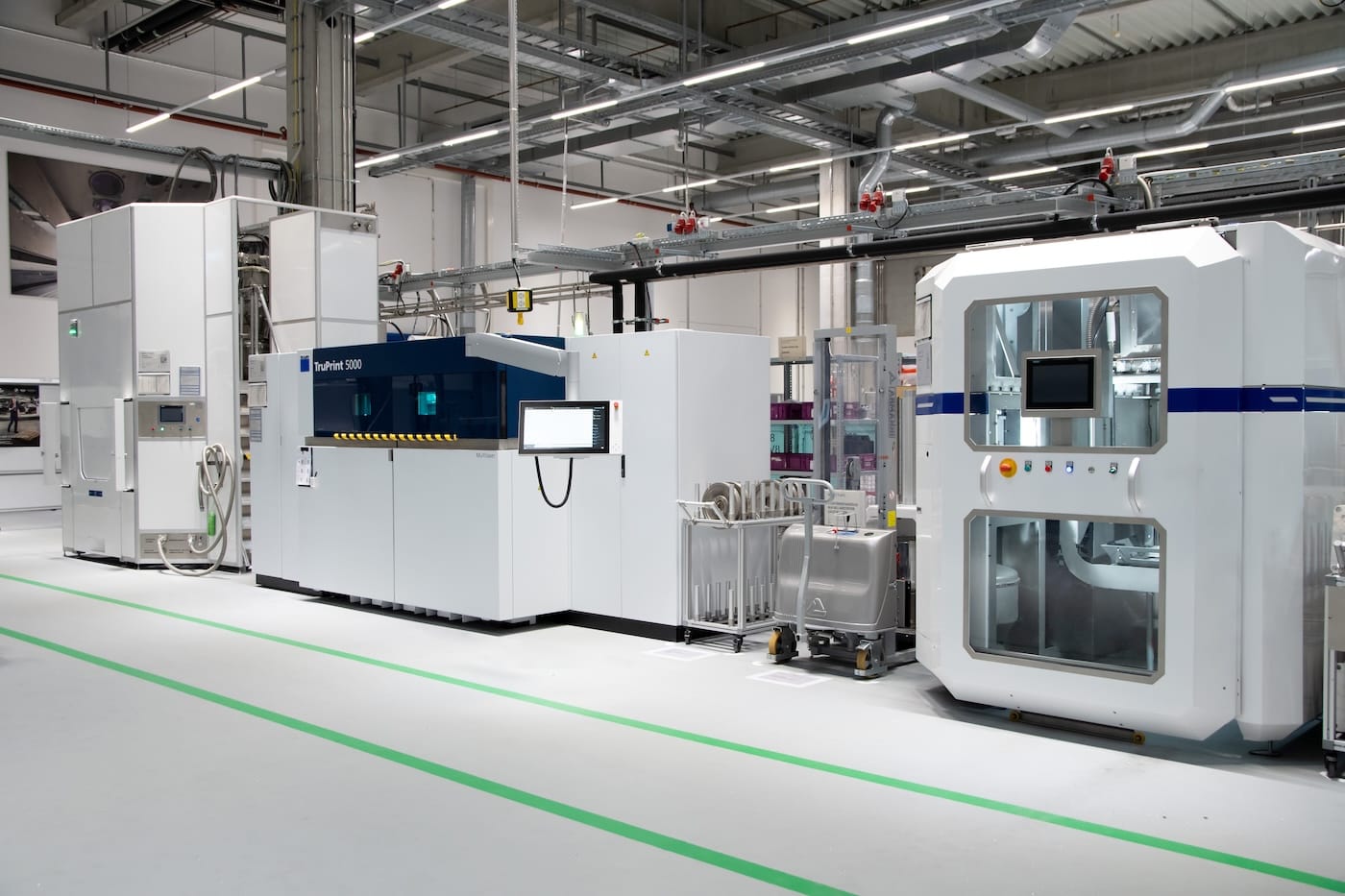
Additive manufacturing systems from Farsoon, HP and TRUMPF (now ATLIX) inside BMW Group's AMC. (BMW Group)
Göbel also spoke about how automated, digitally networked process chains, open-material systems and open interfaces are a "key pillar" of BMW's scaling strategy, and said future technology portfolio investments will be built around these requirements.
Speaking about how BMW scouts new technologies, Göbel explained that the company has already integrated subprocesses from the Industrialization and Digitalization of Additive Manufacturing (IDAM) project (a project consortium funded by the German Federal Ministry of Education and Research in 2019 to establish automated metal 3D printing production lines), and is now looking towards integrating an 'entirely new generation of metal 3D printers'. In polymers, meanwhile, Göbel said systems that "reliably meet the high performance standards" will increasingly be deployed in the future, including fully series-ready systems, and custom-designed equipment.


