

There’s been a lot of mourning in the additive manufacturing (AM) industry as of late. Companies that were once considered beacons of the sector, with gargantuan positions on trade show floors and more superlatives than a Sports Day participation certificate - best, strongest, fastest - have disbanded, either swept up in a relentless tide of M&As or forced to shut up shop under difficult market conditions.
Perhaps the most prolific of such is Desktop Metal, the former 3D printing unicorn that, when it launched on the cover of TCT Magazine in 2017, sought to make metal AM a magnitude more affordable, faster and office-friendly.
After a drawn out acquisition saga, in which 3D printed electronics company Nano Dimension aggressively bought up a number of AM entities in a bid to become ‘a leader in additive manufacturing’, a forced sale and Chapter 11 bankruptcy filing this past summer seemed like the end for the Desktop Metal brand.
For 3D printing's former rising star, co-founded by the inventor of the binder-jetting process, MIT's Professor Emanuel Sachs, it has been a rollercoaster few years. There were acquisitions, big ones; a listing on the stock market at value of $2.5 billion; then a series of layoffs, a subsequent reverse stock split, and a failed takeover attempt by Stratasys, after which, former CEO Ric Fulop stated, "our company is not for sale." That changed when Nano Dimension came in with an offer, albeit significantly lower than the one proposed by Stratasys a year earlier, which closed this Spring at a value of $179.3 million. After a strategic review, the last few months have seen Desktop Metal's foreign subsidiaries, including EnvisionTec, ExOne and AIDRO, put up for sale.
For the team that remained, as newly appointed Desktop Metal CEO Thomas Nogueira candidly puts it to TCT, "it got a bit unwieldy." But, a deal with New York-based Arc Impact Acquisition Corporation, which was confirmed last week for an undisclosed sum, is giving Desktop Metal a second wind.
Arc Impact CEO Bryan Wisk founded the investment group two years ago, together with Paul Adams who has since been appointed CFO of Desktop Metal, to focus on energy transitions, semiconductor, and deep technology investing. Desktop Metal, Wisk believes, is a good fit.
"Our overall view is that for a lot of traditional public sector investments, like infrastructure, the private sector is really going to have to step up globally," Wisk told TCT. "That's our overarching thesis."
The company said it plans to deploy its newly acquired assets - which includes Desktop Metal's binder jet IP, Adaptive3D’s DuraChain elastomers and FreeFoam expandable resins - in a 'distributed R&D-as-a-Service network', which will feed into centralised, high-throughput manufacturing hubs. Wisk shares that Arc was initially in talks to purchase the entire company, but the strategy evolved to a "very drilled down, laser-focused" view towards core Desktop Metal technologies.
"Our primary focus was really on keeping the business alive and a belief that there were valuable technologies here and an amazing team across the globe," Wisk said. "We wanted to give them all opportunities to be able to carry that torch."
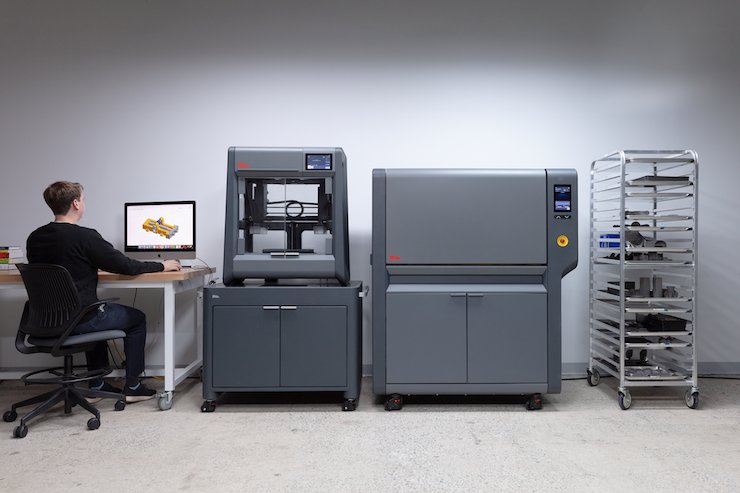
Desktop Metal has talked a lot about 'additive manufacturing 2.0'. This is Desktop Metal 2.0 but it's also Desktop Metal redux. The industry has always insisted that additive manufacturing is 'just another tool in the toolbox'. But what about when you have too many tools to choose from? A quick tot up of the technologies Desktop Metal boasted at its peak includes metal, sand, wood, dental, polymers, composites, foam, biofabrication, and even sheet metal forming. Some of these technologies, Nogueira concedes, "really weren't ready for prime time". Now, its new offering is focused on technologies that originate back to where Desktop Metal started, bolstered by existing software from its Live Suite, including Live Sinter, and developments in AI, all capabilities that its new leaders believe will be crucial to industries such as defence, automotive, aerospace, medical and energy. Arc, for example, saw the potential in the latter six months earlier in a distributed energy application, specifically focused on magnets and future battery technology.
"What we really want to do is advance this technology," Wisk explains. "The Shop [System] was just a generation one product. I think the market really needs to see what's been under the hood at this company, which is going to really blow people away."
" This is somewhat rewinding time," Nogueira adds. "But we've been continuing to evolve binder jet technology, our furnace technology, and that has situated us with some of these key programs where we've been focusing on what the market has been asking for."
Several of those programs are already underway in defence, including a $7.9 million collaborative project with the U.S. Army DEVCOM Ground Vehicle Systems Center (GVSC) to qualify aluminium binder jet for defence vehicle components, plus a $2 million program with the U.S. Department of Veterans Affairs to manufacture FreeFoam parts, including patient cushioning devices. There are also multiple U.S. Department of Defense projects in place to develop silicon carbide (SiC) components and SiC 3D printing to improve missile defence system performance, an area of materials development Nogueira believes has been somewhat overlooked.
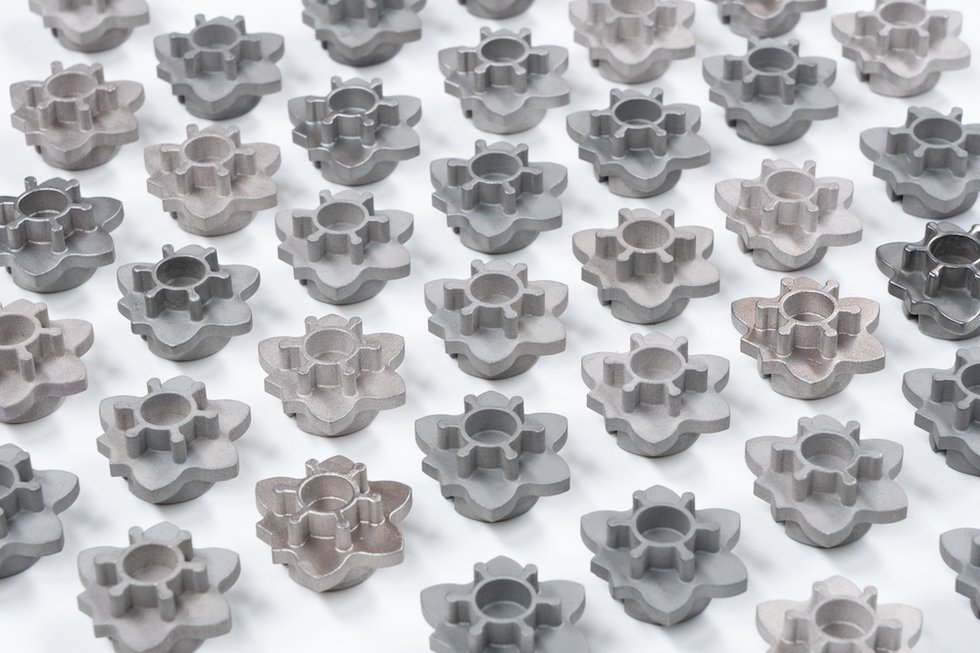
"Our ability to binder jet those materials, which are very difficult to traditionally manufacture because of the nature of the particles, allows us to do complex geometries and create parts that either you could only do through multiple assemblies or you just couldn't make them," Nogueira says.
For the longest time, 3D printing has been labelled as a technology in search of an application. In a blog shared last week, Wisk described how Arc aims to 'build the 21st-century idea factory' that will 'invite the world’s application problems into a shared engine that can move from insight to industrial output quickly and responsibly', emphasising that it will favour 'urgent, concrete applications' and 'works backward to the science'. There are several ways the new Desktop Metal aims to do that. It will still develop and sell machines, and plans to continue working with previous resellers and distribution partners globally. But this solutions-focused approach can also take the form of application development and joint projects.
" We've been here a long time," Thomas says, noting people like Jonah Myerberg, Desktop Metal's CTO who is part of the 'go forward' team. "That's where a lot of the excitement is because the company that we joined and worked in for the first handful of years, pre-IPO world, very much was that everybody really focused on these key applications and key hardware solutions paired with our software. We were all rowing a boat focused on those key things."
"Maybe Paul and I view this space a little bit differently than people who've lived it, breathed it for their whole careers," Wisk adds. "We feel like the material science and application development, is it sort of the right place in the right time for this technology? We think if we can give the technology more runway, and the way to do that is to find actual applications that can get customers to a solution. They don't care if you arrived at that solution with a hamster in a wheel, spinning a conveyor belt, as long as it solves something that they can't solve on their own."
Nogueira acknowledges the rough couple of years the company has been through. There's a feeling of relief that the days of M&As and uncertainty are behind them, but Nogueira says it's mostly a sense of gratitude.
"One of the things that we found through this process is how many customers depend on our technology," Nogueira said. "When we were stuck these last couple months and we had difficulty shipping product amid everything that was happening, we saw how much it impacted customers. So, that has been, I would say, a renewed sense of confidence that what we're doing is important and we need to continue to develop and iterate and grow and make the next best thing because real companies who are solving real problems in industry are depending on us."
Wisk felt that too, in the solidarity from the remaining team, who told him they stayed because of Nogueira and a belief in the technologies they had. It was also the handful of Desktop Metal's 6,000+ customers, who somehow got a hold of Wisk's phone number and were calling to say how much they needed this technology to keep the lights on.
It would be easy to write off Desktop Metal as a product of AM's overblown promises. There may even a sense of schadenfreude about the potential demise of a company that, just five years ago, was the highest valued company in the AM space and shipped its first 3D printers to the likes of Google. But Nogueira has a clear message, an invitation even, for any potential doubters.
" We are here to focus and to bring hardened solutions that can make a difference," Nogueira said. "It's not going to be about splashy marketing and trade shows. Those days are passed. I think we have to stand on the results. We have to embrace the past. We can't erase it and we're going to try and prove it day in, day out. This is a technology that we all love and believe in, and we want to work with them."
Going forward, the company says it plans to concentrate on programs supporting economic competitiveness and national security, such as heavy rare-earth–free permanent magnets, sodium-ion solid-state battery components, solid-state transformer parts for AI data centres and grid modernisation. Arc is confident it has the team and the technologies to do it.
"We think this is one of the most critical technologies to the global macro environment that we're heading into," Wisk concludes. "So if we can just get it in really good shape and be good at the parts that are agnostic to any business, everybody comes in each day and doesn't ever worry about M&A and due diligence and all that, and can just focus on what they do. I think this is the best team in the world for that."


