

Kizuki Co. Ltd. has completed Japan’s first government-approved two-story 3D printed reinforced concrete house.
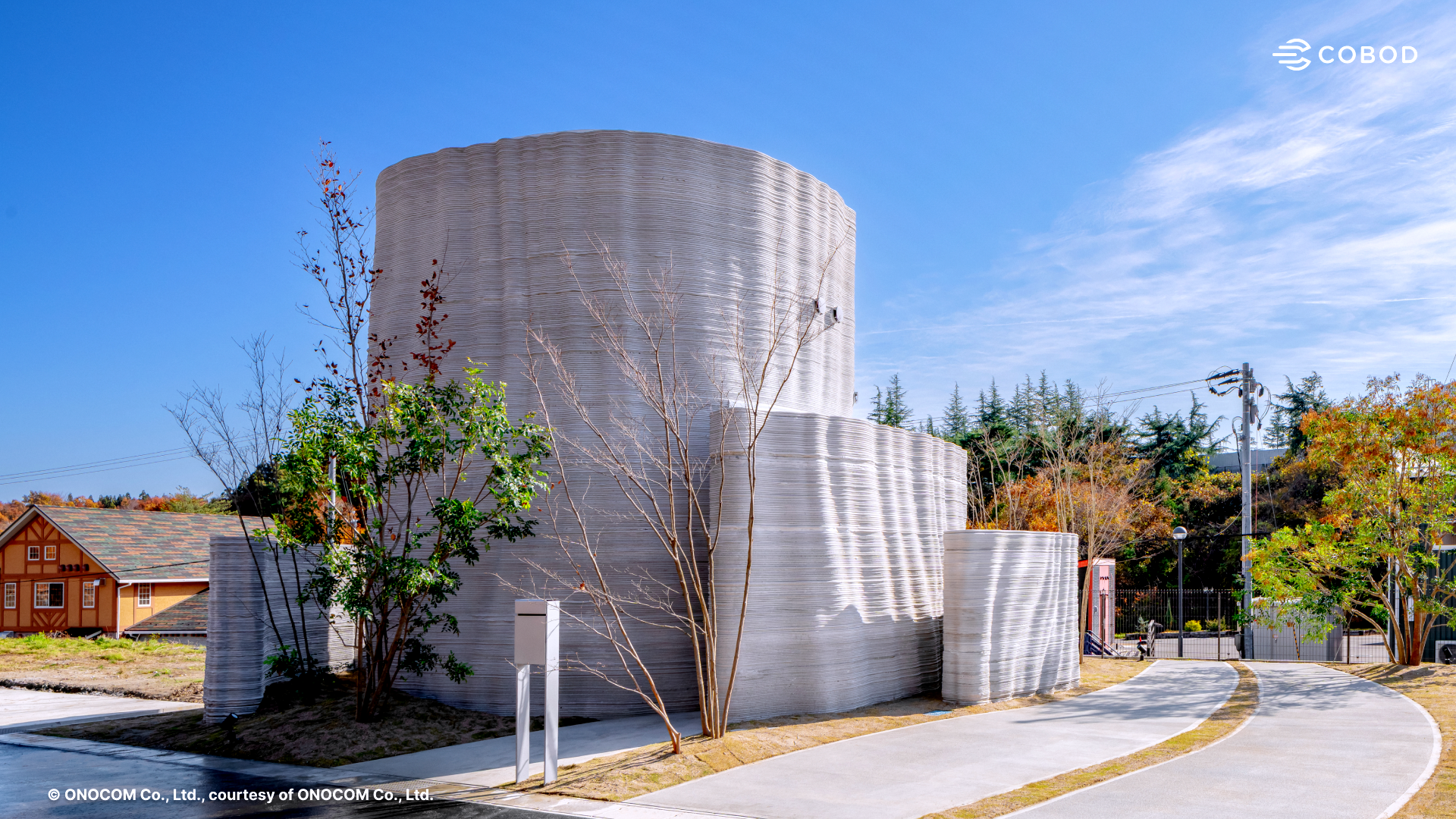
The 537-square-foot house (329 sq.ft. ground floor & 209 sq.ft upper floor) is said to meet Japan’s stringent seismic design requirements and features 3D printed and cave-inspired arches, floor slabs, and roof slabs, as well as several printed interior elements that extend the curved geometry throughout the interior.
To build the house, a four-person crew operated a custom printer configuration delivered by COBOD International in seasonal conditions (from below 10°C to around 35°C). The COBOD system enabled printing from 0,5 m (20 in) below ground to a total height of 7 m (23 ft).
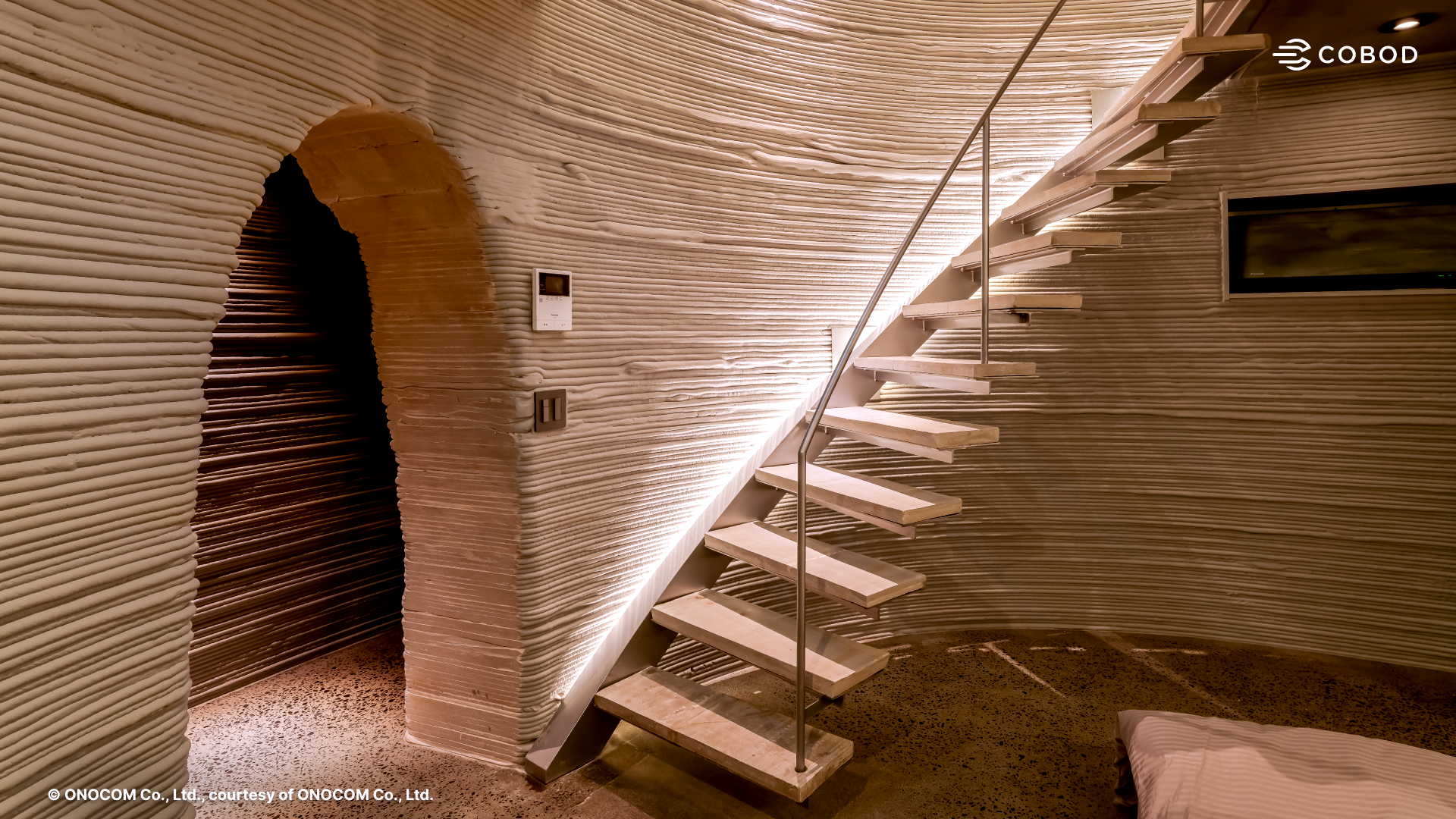
COBOD International believes the project has demonstrated that 3D printed reinforced concrete can serve as a 'structural alternative to timber construction in one of the world’s most earthquake-prone regions.' Timber remains the dominant material in Japan's residential construction sector due to the regulatory clarity around the material and the nation's long-established craftsmanship. But with an ageing workforce, alternative approaches to construction are being assessed.
After the success of this project, the technical regulatory learnings are said to be informing Kizuku next development phases. The company is evaluating broader applications where seismic performance, execution speed, and reduced dependence on manual labour are critical.
Rika Igarashi, CEO of Kizuki Co., Ltd. said: “Based on the knowledge gained through our recent residential construction project, we plan to expand the application of 3D printing technology into civil structures, disaster-prevention and defence infrastructure, and post-disaster reconstruction. We are also developing a construction training program and a digital construction management system, aiming to establish a sustainable construction-industry model.”
Henrik Lund-Nielsen, Founder and General Manager of COBOD International, added: “Japan has some of the most demanding seismic requirements in the world. Seeing a government-approved 2-story 3D printed reinforced concrete house completed here confirms that 3D construction printing is ready for projects that rely on structural precision and consistent quality, also in seismic areas. Kizuki’s project shows how our technology handles complex geometry, varying climate conditions, and strict regulatory standards.”


