

When transitioning from prototyping to production, the goalposts move. In fact, several do.
What might have been acceptable before wouldn't be tolerated now. What may have been seen as a bonus then is a non-negotiable moving forward.
As Carl Dekker, President of Met-L-Flo, gathers a cohort of industry experts, he asks the question: What level of deviation is acceptable?
The panel - Brennon White of General Motors, Kevin Ayers of 3D Metal Konsulting, LJ Holmes of Harrisburg University of Science and Technology, and Chris Baschuk of Point Designs - will be on hand to answer.
As Dekker prepares to derive practical insights and advice from this panel, he sat down with TCT to be on the other side of the interview dynamic. Here's what he had to say about the session that will bring the curtain down on the RAPID + TCT Conference 2026.

TCT: Hi Carl. A big part of the conversation that you'll lead will be on ‘acceptable deviation.’ Can you provide some insight into the dynamics at play when transitioning from prototyping to production? How many different people are involved in discussions around deviation, and how challenging is it to reach an agreement?
Carl Dekker [CD]: Well, we have automotive, medical, industrial, and military points of view. Each of these has different needs and requirements; however, many may have different needs based on part applications. Every agreement will need to be discussed individually, but if there are areas that have uniformity, we hope to learn where these points are and what the associated factor may be.
TCT: How has the conversation around tolerance and deviation changed since you started running a service provider in this space? Are manufacturers asking smarter questions now, or are the same misconceptions still common when a new customer comes through the door?
CD: Tolerance requirements are still driven by the customer, but we are seeing more data that helps us understand what might be possible. This supports the discussion that investigates the possible, but it does not give any guarantee of success.
"Targeting the wrong applications leaves a bad mark on AM and causes people to become less accepting of trying future applications."
TCT: Between prototyping and production, what is the most underestimated challenge manufacturers face when making that transition with AM?
CD: Prototypes typically don’t have volume, so the expectation may be easier to achieve with acceptable scrap. The same scrap rate in production could shut down lines or incur costs that prevent further investigation into the application.
TCT: What is the key learning you’re hoping to convey through your presentation at RAPID + TCT?
CD: If we can help uncover some of the applications achievable and also understand what limits those outside of consideration, maybe we can get support to develop a few more success stories. This may help give visibility to areas that should not be targeted. Targeting the wrong applications leaves a bad mark on AM and causes people to become less accepting of trying future applications.
TCT: Finally, Carl, who should attend your session?
CD: We would like to educate the C-level, but understand that may not be realistic. Upper management responsible for engineering new product, and supplier quality engineers would be key people to educate. Engineering looks at AM as another tool but getting a champion to lead investigation and getting those responsible for approving the process are some key points to share critical knowledge.
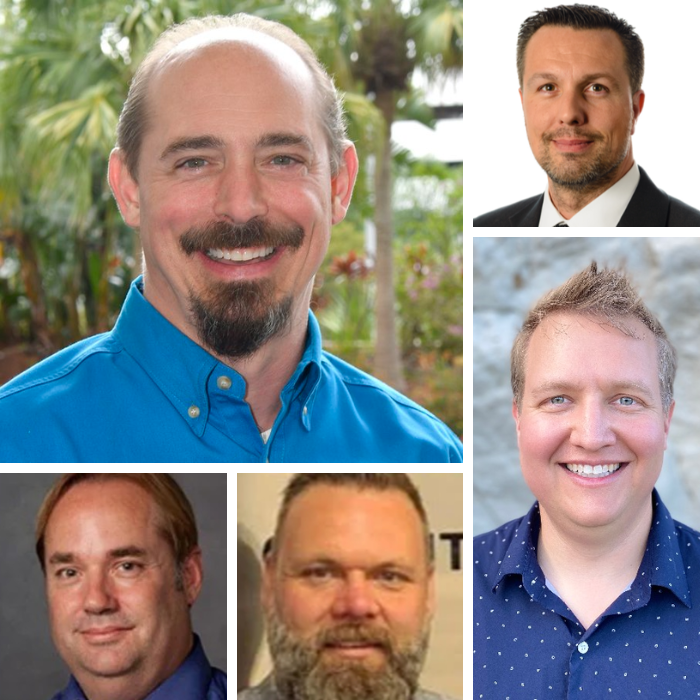
From Prototype to Production: Navigating Acceptable Deviation in AM | Moderator: Carl Dekker | Panelists: Brennon White, Kevin Ayers, LJ Holmes, Chris Baschuk


