

Increasingly, Boston Children's Hospital is turning to 3D printing to support surgical planning, pre-surgical rehearsal and medical education.
Nick Provenzano and Mike Silver have been central to that work and will present the impact 3D printed anatomical models have had on Boston Children's Hospital at the upcoming RAPID + TCT Conference.
Paediatric patients present a particular set of challenges, including smaller anatomy, faster rates of growth, and higher stakes around timing and accuracy.
Ahead of their RAPID + TCT presentation, TCT spoke with Silver about the realities of modelling for paediatric patients, the current limits of haptic fidelity, and the limitations that don't get discussed enough in conversations about 3D printing in healthcare.

TCT: Most of the patients you serve are still growing – how does that complicate the modelling process, and how do you respond to that challenge?
Mike Silver [MS]: Working with paediatric patients adds an extra layer of challenge because their anatomy is smaller and changing relatively quickly. Timing becomes more critical because what we’re modelling is a snapshot in time, especially in these cases. To address this, we focus heavily on keeping turnaround times as short as possible so the model accurately reflects the patient’s anatomy and pathology as close to surgery as we can get. If a surgery is delayed or treatment is staged, clinicians will often request updated imaging to make sure the model will represent the anatomy accurately for surgical planning.
TCT: How closely do the current materials replicate the feel of real tissue, and where does the fidelity still fall short of what surgeons and trainees need?
MS: From a geometric form standpoint, today’s prints are very accurate, and the shapes, structures, and dimensions are well represented. In terms of fidelity and haptics, they get close enough that surgeons can rehearse most key steps of a procedure on the model, which is extremely valuable. That said, fully replicating exactly how real tissue behaves is still a challenge. Biological tissue is incredibly complex, with unique mechanical properties that are difficult to match using synthetic 3D printed resins. Suturing, stretching, and cutting are especially demanding use cases, and thin, flexible printed materials often struggle to match the durability of real tissue. Though certain printing material presets allow us to get close, there’s still significant room for improvement in material properties.
The quality of the final model is ultimately dependent on the quality of the imaging data.
TCT: You’ve had success with AM at Boston Children’s Hospital, but what is the most significant limitation that isn’t talked about enough?
MS: Aside from higher fidelity haptics, one other limitation that doesn’t get discussed enough is scan quality. The quality of the final model is ultimately dependent on the quality of the imaging data. Issues like slice thickness, motion artefacts, low resolution, or suboptimal scan protocols can limit how accurately we’re able to segment and model the anatomy , regardless of how advanced the printing technology is. Ensuring that the scan quality is sufficient for the needed model is extremely important. It is much more difficult (and sometimes impossible) to get a useful and reliable model from a very low-quality scan.
TCT: What is the key learning or message you’re hoping to convey through your presentation at RAPID + TCT?
MS: The key message is that PolyJet anatomical and surgical planning models are having a significant tangible impact in healthcare. They help surgeons plan and perform procedures more quickly and effectively, provide peace of mind for patients and families facing difficult medical decisions, and offer meaningful benefits to hospitals by reducing operating room time and associated costs. Most importantly, though, these models reduce risk for patients and improve treatment outcomes. With PolyJet in particular, though it’s currently a more expensive and slightly less accessible technology, it’s important to understand the immense value it delivers when other printing technologies are insufficient and the accuracy, multi-material, haptic, and visual properties play a key role in the impact of the model’s use.
TCT: And who should attend your session?
MS: This session will be informative for anyone interested in how 3D printing and specifically PolyJet modelling are currently being used in hospital settings. It will also be a great introduction for those who may be less familiar with PolyJet technology but are curious about its capabilities and how it’s being applied in real‑world healthcare environments today.
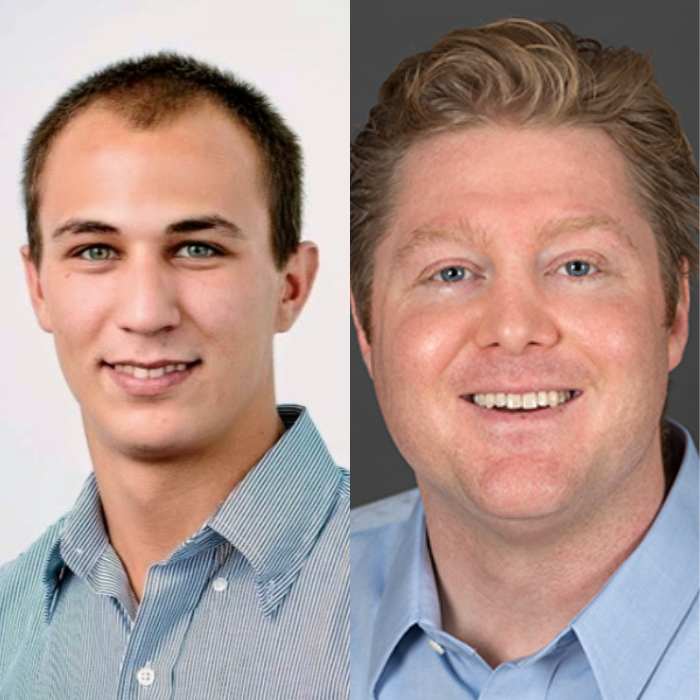
Innovating Pediatric Healthcare: The Impact of PolyJet models at Boston Children’s Hospital | Nick Provenzano & Mike Silver | Boston Children's Hospital


