

Dylan Murray has recently moved into a new role in Alloyed’s production department, but for three years prior, he was working as an Alloy Design Engineer at the Oxfordshire-based firm.
An Alloy Design Engineer at Alloyed is tasked with developing, testing and delivering new materials in line with customer-funded programs. Murray has been expected to gather test data, feed them into Alloyed’s computational models, coordinate with material suppliers, and communicate with customers to keep them across the progress of the program. Specifically, Murray was focused on developments relating to magnesium alloys.
Here, Murray sheds light on the typical day of an Alloy Design Engineer.
A TYPICAL DAY
07.30 | I’m a bit of an early bird, and this is a pretty quiet time of the day at the office, so it allows me to get on and do whatever pre-existing items there are where I might need a little bit of headspace.
The first thing I usually do is check on emails from any materials suppliers or customers. We have a lot of back-and-forth about the latest atomisation runs, test results on new custom compositions that we’ve atomised, and general updates on progress. ‘When do we expect to ship? Are we behind schedule?’
If we’ve got any prints – builds, we call them – running on the machines downstairs for projects I’m working on, I’ll have a look at how they’re doing, note down any key observations, pop back upstairs and knuckle down.
10.00 | At Alloyed, we have daily stand-up meetings. The project team, usually online, get together for 15-30 minutes at the start of the day for a progress update. Here, we cover the latest microscopy work, tensile performance data, and the outcomes of some laser parameter tests.
Typically, I’m managing projects, so I’m assigning tasks to members of the team, and the meetings will allow me to check in on how they’re doing, what they did the previous day, make sure we’re all aligned on the key targets for the day ahead, up until the next meeting we have with the customer, or up until our deadline.
Then we split off and do our individual tasks.
10.30 | Usually, mine would involve making PowerPoint slides for customers to keep them up to date on our progress.
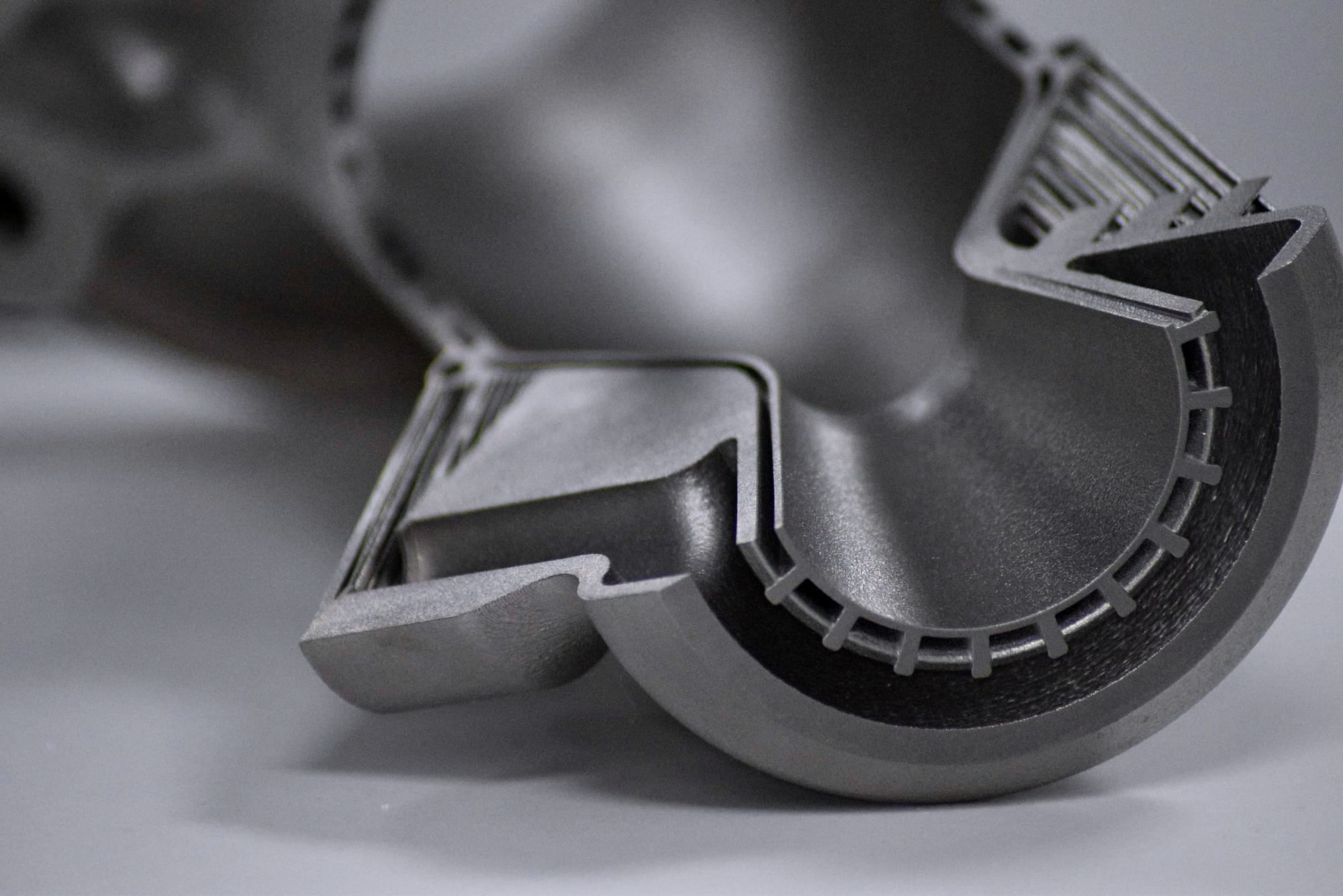
13.00 | After lunch, I’ll take the time to review the print jobs of other members of the team. At Alloyed, when we create a file to send to the machine, another person in the team generally has to review it. I’ll review the process route card that it would go through to move around our wider facility after finishing the print, provide any feedback to the team member, or otherwise release it for printing and scheduling on the machine.
14.00 | More PowerPoint slides!
14.30 | Before a run of meetings to finish the day off, I will often find time to have conversations with the patent attorney that we use at Alloyed. We’ll usually talk about the progress being made on our IP and any patent applications that we’re filing for, as well as discussing new materials or techniques relating to magnesium.
15.00 | At Alloyed, most of our customers are based in the US, so our customer meetings tend to be right at the end of the day. Presenting my PowerPoint slides, I’ll share with the customers our latest updates.
17.00 | Before the end of the day, I’ll tweak any customer slides, add any information that they’ve asked for, and then send that off via an email or whatever shared file location that we have.
Question & Answer
TCT: Dylan, tell us first about your pathway that led to this role at Alloyed?
DM: I joined Alloyed as a Graduate Materials Engineer, which is essentially the same as an Alloy Design Engineer. This is my first engineering role out of university. I knew about Alloyed because they had links to Oxford University, which is where I went to study Materials Science. Almost as soon as I arrived, we started initial conversations with one of our existing customers on magnesium 3D printing, which we hadn’t done and knew would be quite challenging. We went forward with a program with them, and then ever since, I’ve been working on magnesium. I stayed mostly working on consumer electronics programs but have moved around to address other projects or areas of growth associated with magnesium within the business.
TCT: Is everyone at Alloyed working within a market-specific department?
DM: We used to be aligned to markets, but now it’s more aligned to the type of work we will be doing for a customer. So, now there’s a manufacturing unit, which is focused on component manufacture, and an innovation unit, where what you’re delivering for the customer is not a component but knowledge or a new material, and then there’s an internal R&D function within the business as well. Engineers, generally, fall within one of those three.
“People would assume alloy design takes years. At Alloyed, that could shorten to six months.”
TCT: So, where do you spend most of your time?
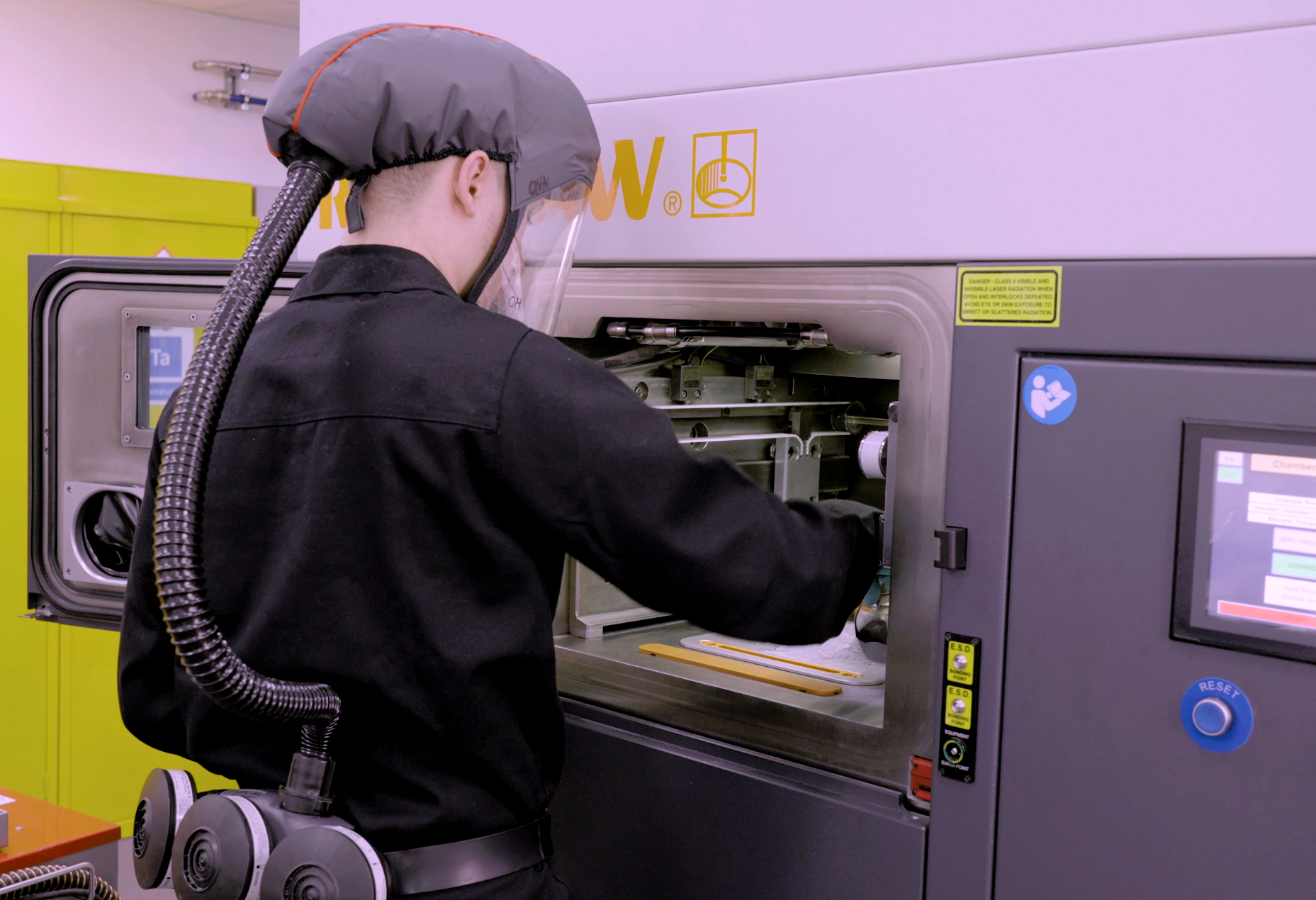
DM: A lot of time is spent on the manufacturing floor, looking at the AM machine, how the jobs are going, following up with any downstream process, whether it’s a coupon or component. That takes maybe an hour or two of my day, speaking to operators, speaking to other members of the team that might be taking measurements or doing tests. Then, there’s probably a couple of hours of meetings, and maybe the rest is desk work. But even desk work is always quite collaborative. It’s an open office space, we have a lot of ad-hoc discussions and conversations, so it’s not limited to meetings.
TCT: What do your busiest days look like?
DM: Customers are always the reason why it’s busy. Often, it’s a visit from a group of engineers and program managers from our customer. And they might stay for multiple days. In that case, it’s very busy in the lead up to them visiting, so preparing presentation material, planning out what we’ll be doing with them, and how we want to guide the discussions on certain topics. Then, while they’re here, it’s meetings all day, walking them around the manufacturing site, talking them through detailed aspects of the process, and we’d even spend the evening with them out in Oxford.
TCT: And if time ever opens up, how do you spend that time?
DM: Those times are pretty few and far between, but it’d probably be reviewing the latest data packs from other people within the team, reviewing some of their work, giving them pointers and feedback. And I might review some documentation that is feeding into an application or project proposal that’s going to a customer.
TCT: Anything else to add?
DM: Yeah, people would assume that alloy design takes years and years to go from first concept to releasing a final article and a data sheet that you might [commercialise], but the exciting thing about working at Alloyed is that it could shorten to six months. The speed at which we can iterate using computational modelling and a pretty good supply chain network means we can very quickly go from an idea to an alloy that we’re happy to market to customers.
Quickfire questions
What’s the best thing about your job?
The pace at which things happen.
What have you learned?
A hell of a lot about magnesium. I had no exposure to it whatsoever before I joined Alloyed.
Why should somebody want to work in AM?
You get an opportunity to work on some awesome products. Generally, companies come to us to do something they can’t achieve with other processes. It’s challenging but really rewarding.
Who is perfect for a job like yours?
People who have a keen interest in metallurgy, who like a challenge, and are strong communicators.
And what advice would you give to your younger self?
Learn as much as possible from the people around you.


