

Key highlights:
- Money & power: Exploring the economic and technical drivers behind the decision of Divergent et al to develop their own AM technology.
- What it takes to make: What's required to develop a proprietary AM process.
- Another challenge presents itself: How it will impact machine OEMs as they vie for the attention of the world's largest manufacturers.
At four separate intervals in the last 20 years, the same verdict has been reached regarding the metal additive manufacturing (AM) technology available on the market.
Norsk Titanium in 2007, Seurat Technologies and VulcanForms in 2015, Freeform in 2019, and now Divergent Technologies in 2026 all determined they would be better off developing their own metal AM technology than procuring – or continuing to procure – from the wealth of machine OEMs occupying the space. So did 3DEO in 2016, but the company recently filed for insolvency.
There are technological drivers and economic drivers, incremental changes and complete revamps, but whatever the motivation and however they went about it, all five of those companies are now rivalling the industry’s machine providers for the attention and business of the world’s largest manufacturers.
And as these contract manufacturers look to enter scaled production with AM, it presents another challenge for those with a machine-sales business model. Not only does it suggest a dissatisfaction in some quarters about the products on offer, but it also results in increased competition.
In this Deep Dives report, we talk to representatives of Divergent Technologies, Seurat Technologies, and Norsk Titanium to understand what they perceive(d) to be the limitations of commercial AM solutions, how the vertically integrated development of an AM technology affected their business case, and how they see their approach impacting the AM market moving forward.
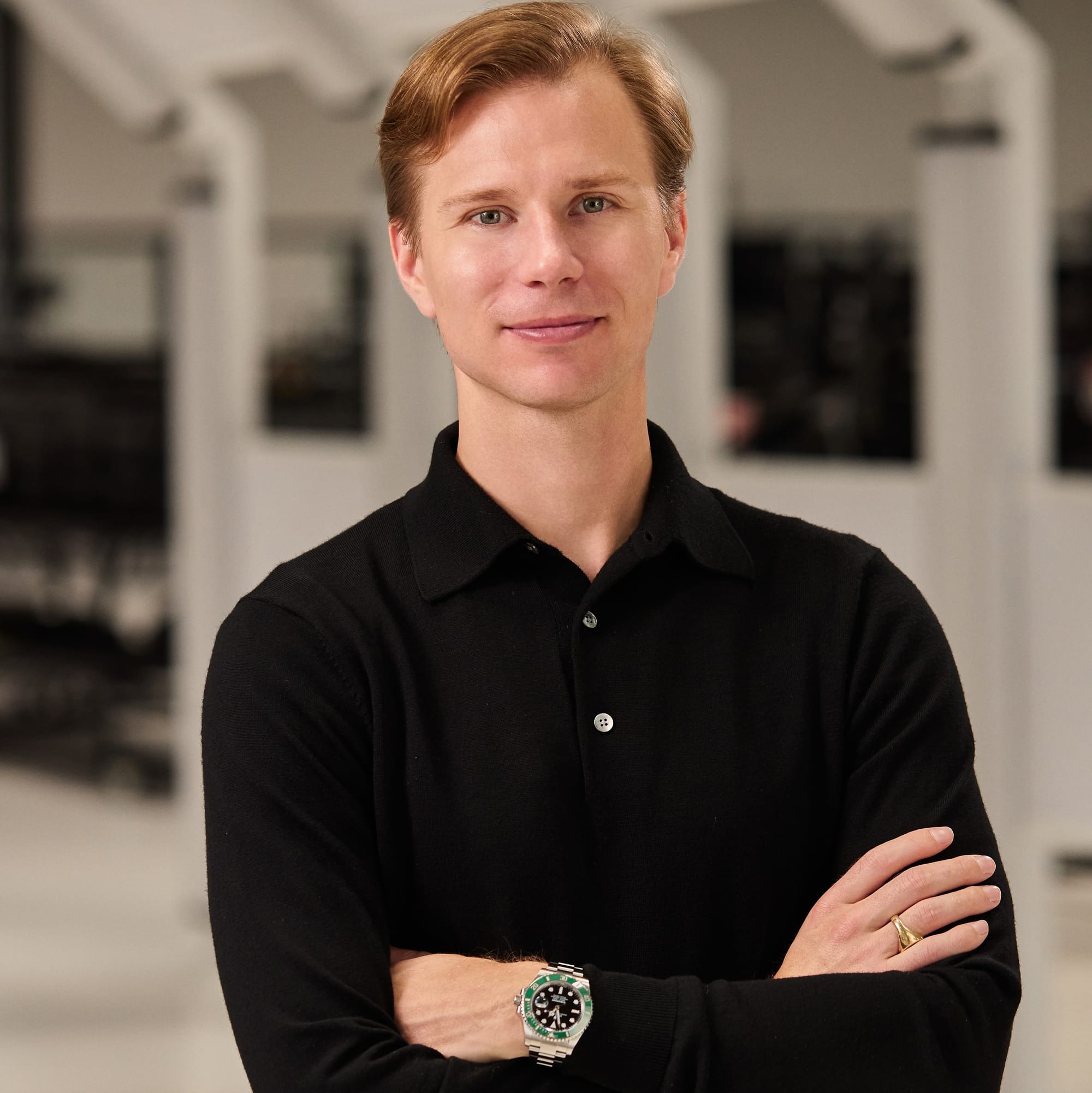
In conversation with... Lukas Czinger, Divergent Technologies
TCT Magazine's Autumn edition will feature an in-depth Q&A with Divergent Technologies CEO Lukas Czinger.
Czinger discusses the motivation for the development of the Monolith One, the technical capabilities of the machine, and the big learnings the company has obtained through scaling with metal AM.
The technical drivers
Seurat, from what we can discern from the publicly available information and each company’s openness, has pursued the most intense R&D effort in order to make available a differentiated AM technology.
The company spun out of Lawrence Livermore National Laboratory (LLNL) having decided it would seek to develop an additive manufacturing technology that could compete with the costs of casting, forging, and machining at scale. At LLNL, founder James DeMuth was working on fusion power and, when calculating how long it might take to print a 12-metre diameter chamber with laser powder bed fusion (LPBF), decided a build job that would exceed the years he had left on the planet was probably not viable. And if that was an unviable print job, how many more were out there? How many more applications weren’t getting off the ground because of the print speeds of existing AM tech? And how many were failing to prove economically sound?
Seurat’s approach was to start with a blank slate. The company engineered its own laser technology, light valves, print chambers, an XY gantry system, and a range of other ‘sub-systems very different from laser powder bed fusion.’


