Elmet Technologies has announced the issuance of a US patent for a technology that covers the use of a dry powder bed of substantially spherical composite particles, each comprising a mixture and/or alloy of constituent metals.
The patent (U.S. Patent No. 12,571,080 ) is titled “Fabrication of Metallic parts by Additive Manufacturing.”
As the sixth U.S. patent granted in this field, Elmet Technologies says it further strengthens its growing portfolio of intellectual property in powders and processes for additive manufacturing and powder metallurgy applications.
The patented invention discloses methods for fabricating three-dimensional metallic objects using a dry powder bed of substantially spherical composite particles – each comprising a mixture and/or alloy of constituent metals, including tungsten heavy alloys with controlled additions of nickel, iron, copper, cobalt, or manganese. The process leverages advanced spray drying and optional plasma densification to produce highly flowable, densified composite particles, enabling reliable binder-jet printing and other powder-bed additive manufacturing techniques. The resulting sintered parts are said to meet or exceed ASTM B777 specifications for tungsten heavy alloys, with demonstrated performance in density, hardness, and tensile strength suitable for aerospace, defence, and industrial applications.
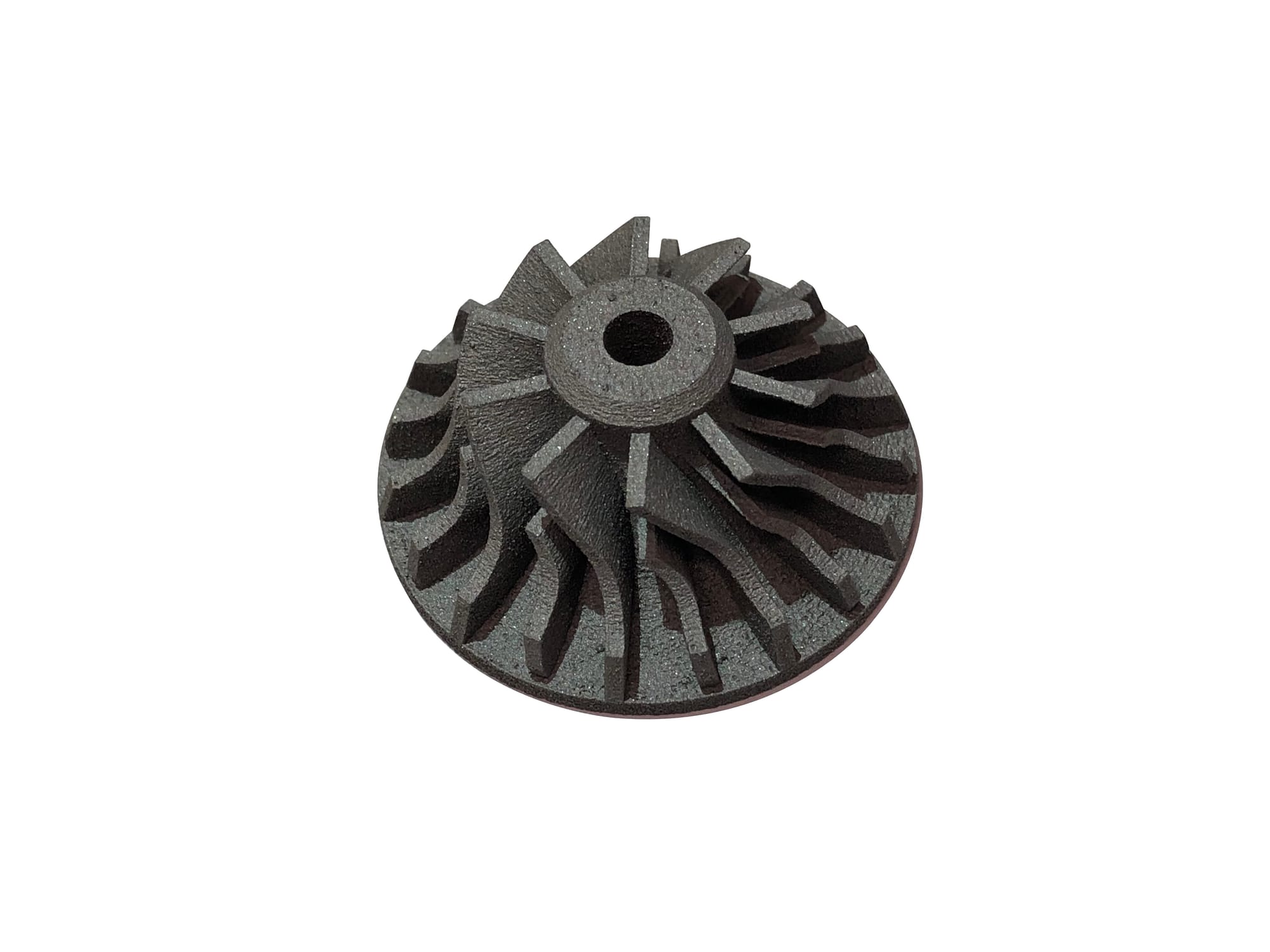
“This patent reflects the depth of innovation our team has built over years of materials research,” said Michael T. Stawovy, co-inventor and Vice President of Research & Development at Elmet Technologies. “By combining spray drying and plasma densification, we have developed a reliable pathway to produce powders and metallic parts through additive manufacturing that meet the demanding performance standards of our aerospace and defence customers – all from a domestically owned and operated facility.”
Key features of the patented invention include:
• Flowable Composite Powder: Substantially spherical particles with a Hall flow rate ranging from approximately 1 s/50g to 25 s/50g, enabling consistent powder-bed spreading and binder-jet printing.
• Optimised Particle Architecture: Each composite particle features tungsten grains surrounded by a matrix of lower-melting-point transition metals, yielding controlled densification behaviour and minimal shrinkage during sintering.
• High Purity: Interstitial impurity concentrations (oxygen, carbon, and trace elements) are minimised through the plasma densification process, preserving the mechanical integrity of the finished part.
• Dual Fabrication Pathways: The invention covers both powder-bed binder-jet printing and wire[1]based directed energy deposition, providing manufacturing flexibility for complex tungsten and refractory metal alloy components.
Elmet says the technology addresses a long-standing challenge in metal additive manufacturing – producing dense, flowable, chemically uniform refractory metal powders that retain their properties under extreme processing conditions. Parts fabricated using this process have demonstrated compliance with ASTM B777 Class 1 specifications, including density, hardness, ultimate tensile strength, and elongation requirements, opening new possibilities to produce complex tungsten components for extreme environments.