The best way to find out if a manufacturing platform is production-ready is to hand it to someone who will break it. So, that’s what Additive Industries did.
Stoke Space, the Seattle-based rocket manufacturer backed by the United States Space Force, Defense Innovation Unit and NASA, is what you might call an additive manufacturing (AM) ’super user’. Additive is core to the products it produces, and since the intent of those products is to unlock the new space economy by radically improving access to and from orbit, the traditional rules of production don’t apply.
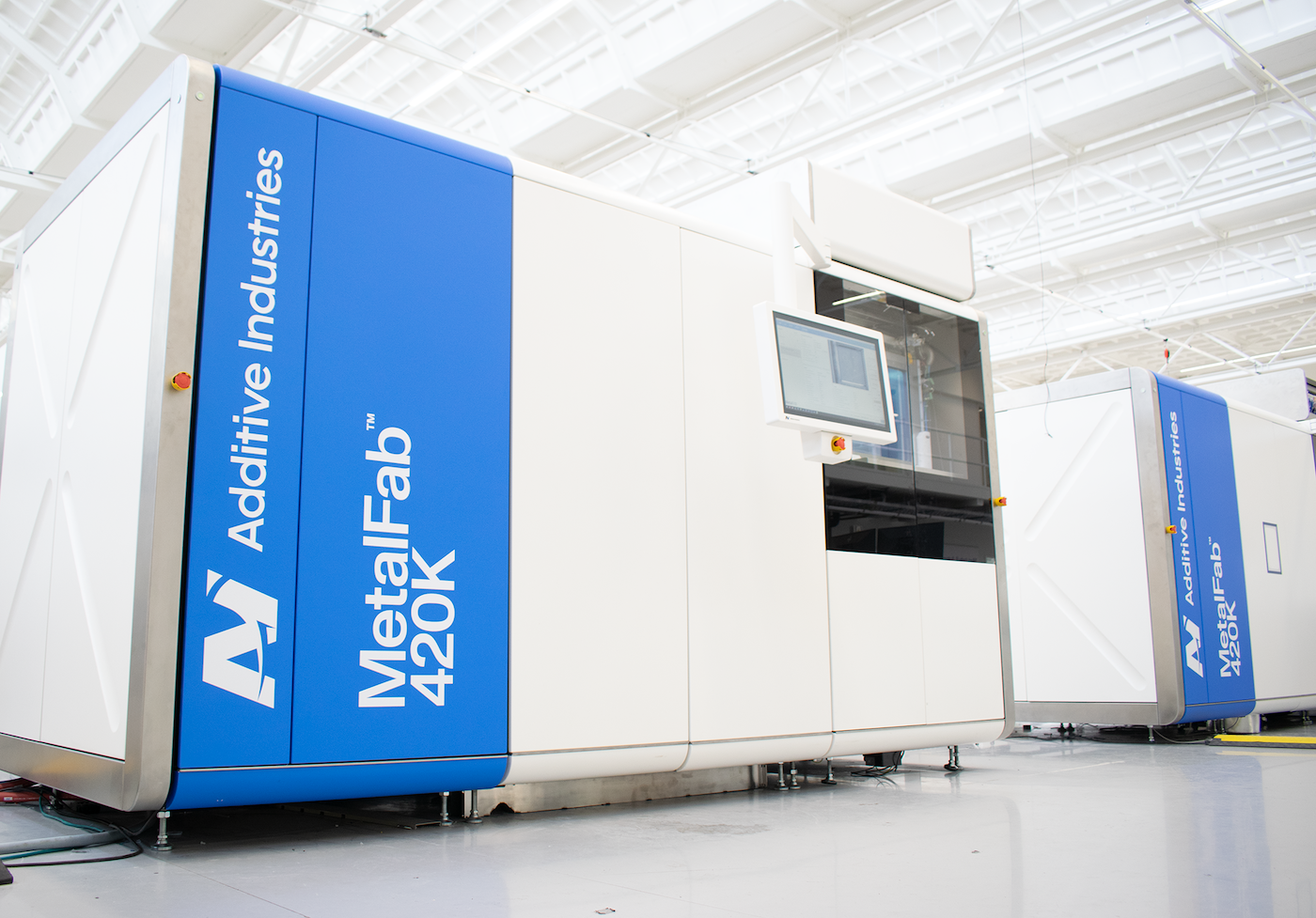
When Additive Industries launched its MetalFab 420K, it did so with ten years’ worth of feedback and over one million production hours from customers who have been deploying its metal powder bed fusion technology to push productivity across aerospace, automotive and high-tech manufacturing. Its DNA, built on automaton and modularity and embedded within its inaugural MetalFab1 system back in 2014, remains. But the new MetalFab 420K, equipped with four x 1-kilowatt full-field lasers and highly optimised gas flow, has been intentionally engineered to advance productivity, flexibility and material possibilities for customers like Stoke Space, who are propelling AM to the max.
“We knew that we had to make our optics future proof,” explains Niels Cruts, Head of Technology at Additive Industries, recalling a development journey that started some five years ago. “Our ambition was to go to 1-kilowatt, keep on building on existing architecture and have them full-field. If you go to higher laser power, then you have to do things differently.”
‘Differently’ takes the form a completely redeveloped gas flow. The MetalFab 420K’s full-field quad-laser architecture means manufacturers can take complete advantage of its 420 x 420 x 400mm build volume with no nasty stitch lines to worry about. To support that, Cruts and team developed an optimised, highly homogenous and high velocity gas flow to ensure consistency and quality across the powder bed, enabling high laser power and scan speeds to be achieved without compromise. The gas flow, together with bigger pumps and filter, resulted in an entirely new module design that is 1.5x the size of the original, with plenty of room for upgrades and servicing, and a 2x increase in gas flow rate compared to its MetalFab G2.
“From the outside, it looks unchanged,” Cruts says. “But the inner workings have completely been redesigned to deal with these higher gas flows.”
This revamped optics approach was first introduced on the MetalFab G2. That existing proof point is where Stoke Space came into the picture.
Stoke Space was already using the MetalFab G2 technology to accelerate design iterations and deliver flight-ready hardware for its Nova launch vehicle. An innovative company, operating in the fast paced new space race, it was the perfect test site for the MetalFab 420K.
“You hand it over to a beta customer to push it to the limit,” Cruts states. “To break it.”
One of the first MetalFab 420K systems was installed at Stoke Space’s Kent, Washington production facility and quickly underwent a rigorous six-month beta program, relentlessly producing various complex components. It hit the ground running by taking additive parts established through its existing MetalFab G2 production process, transferring that knowledge to the MetalFab 420K and feeding back to Additive Industries.
“When we introduced the machine to them, they said, ‘I think you’ve solved like 95% of the problems that we saw multiple years ago, when we were already a super user,’” Cruts adds. “So, they were able to just start using it.”
Additive Industries was looking to prove out its hardware with real time feedback. Stoke Space, fortuitously, was looking for the same.
“For Stoke, speed is the competitive edge,” says Derek Schmuland, Sr. Additive Manufacturing Engineer at Stoke Space. “What Stoke Space focuses on is getting our hardware and systems to test as fast as possible to allow reality to be our feedback.”
Stoke’s Nova rocket is designed to be fully reusable. Everything that goes up from the launch pad must come back down, ready to be flown again. It needs to perform repeatedly and reliably. So does the machine that builds them.
“One of the distinctions since the foundations of the MetalFab1 is that we can do full automated calibration,” Cruts explains. “Something that we introduced with our new 420K development is what we call inline laser alignment. That ensures the stability of the positioning of the lasers during very high demanding laser power, so that you can ensure during the full build that you are not losing your calibration.”
These types of capabilities matter most in production. Full-field lasers, gas flow, inline laser alignment. But Stoke Space was also looking for more. Speed was a priority, but it also wanted to forge ahead with harder to process materials and different alloys dedicated to space applications.
“The ability for them to develop their own parameters, to give them that flexibility, is key,” Cruts elaborates. “We’re giving them more options, more choice, more possibilities. Particularly going into harder to process materials, copper alloys and even refractory materials.”
This flexibility is being delivered through a combination of high-powered lasers, full control of all process parameters, including beam diameter from 100 to 500 microns, and minimal gas flow variance across the build plate.
“With the 420K, we are really pushing towards those super users that really want to have that open architecture and push the limits of the process,” Cruts adds.
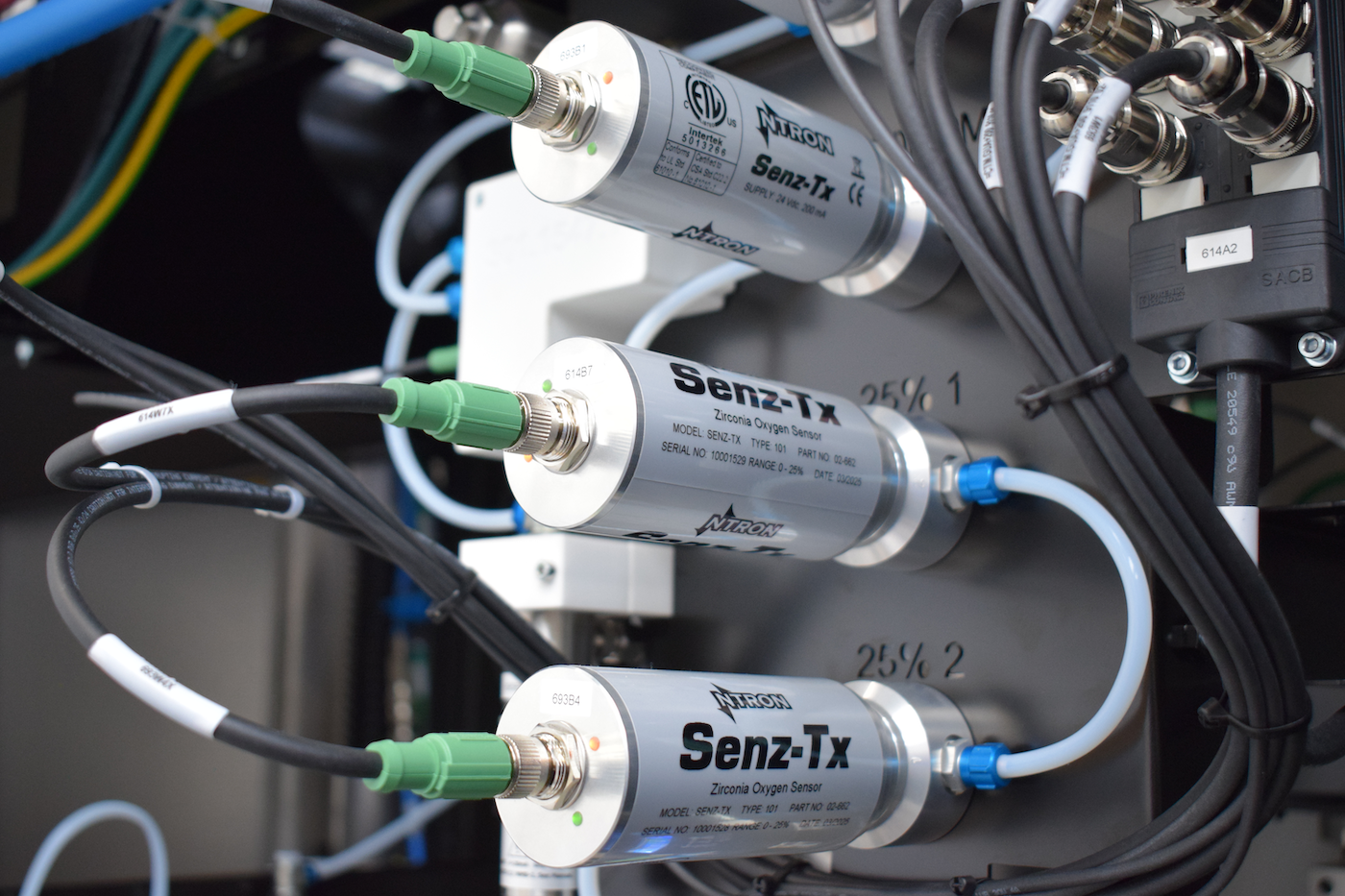
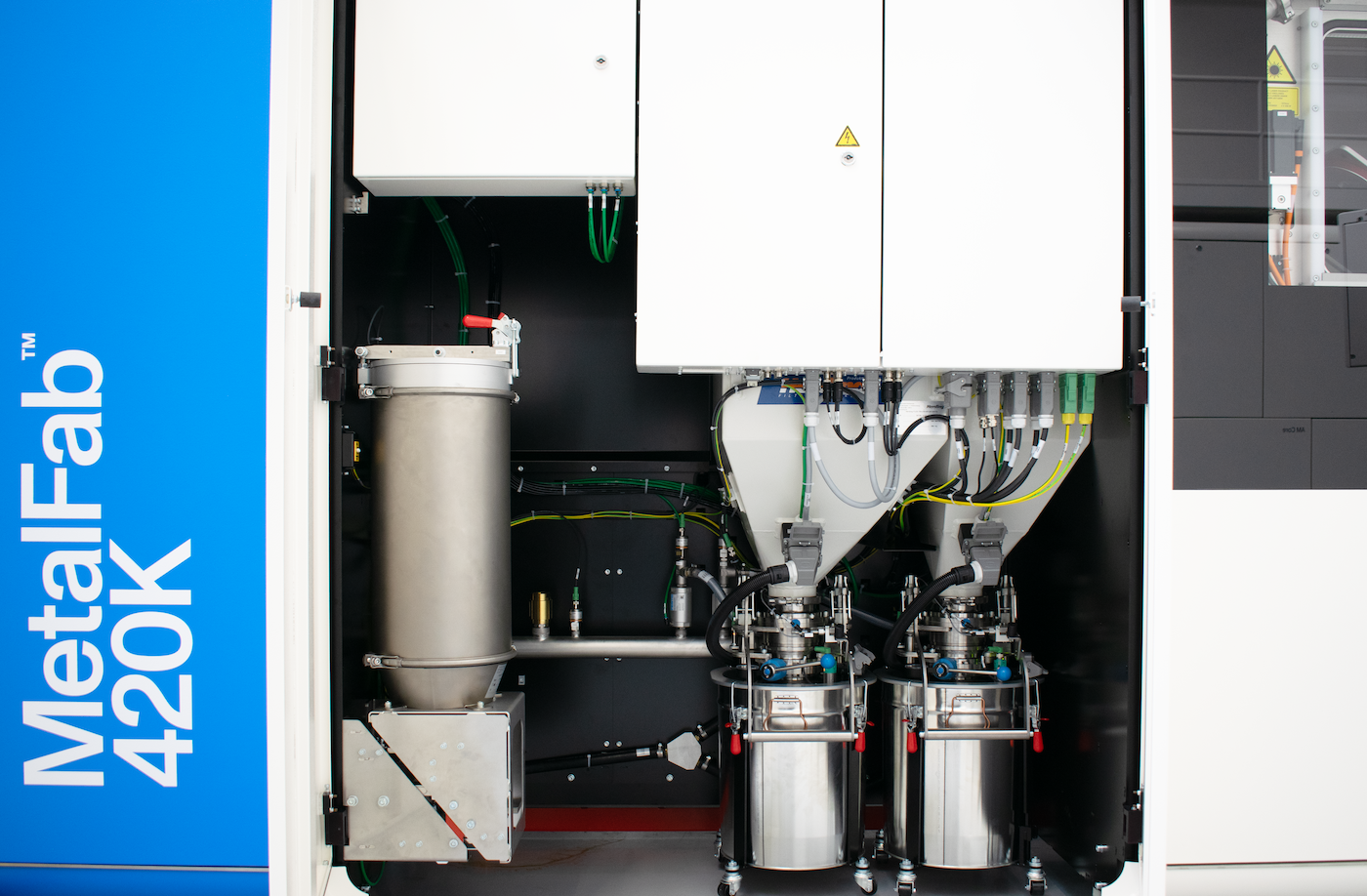
Same DNA, entirely new module design and highly optimised gas glow.
Today, over half of Additive Industries’ systems are installed at customers operating in aerospace, space and defense. And they don’t just buy one machine. After qualification, many will quickly move to adopt multiple systems. Stoke Space was no different. Following the successful beta program, the company invested in five MetalFab 420K systems. One is already installed, a second is on its way, and by the end of the year, the five-strong fleet will be up and running. So far, this confidence, coupled with autonomous capabilities means Stoke Space is reporting uptime numbers above 90% and that ambition for seamless mobility to, through, and from space, is ever closer.
“Additive manufacturing plays a critical role in our manufacturing and production efforts,” comments Kunal Naik, Senior Manager, Additive Manufacturing, Stoke Space. “The MetalFab 420K gives us the productivity, precision, and reliability we need to move quickly from design iteration to flight hardware. Additive Industries has been a strong partner throughout the beta program, and this next step reflects our confidence in the system’s readiness for production.”