
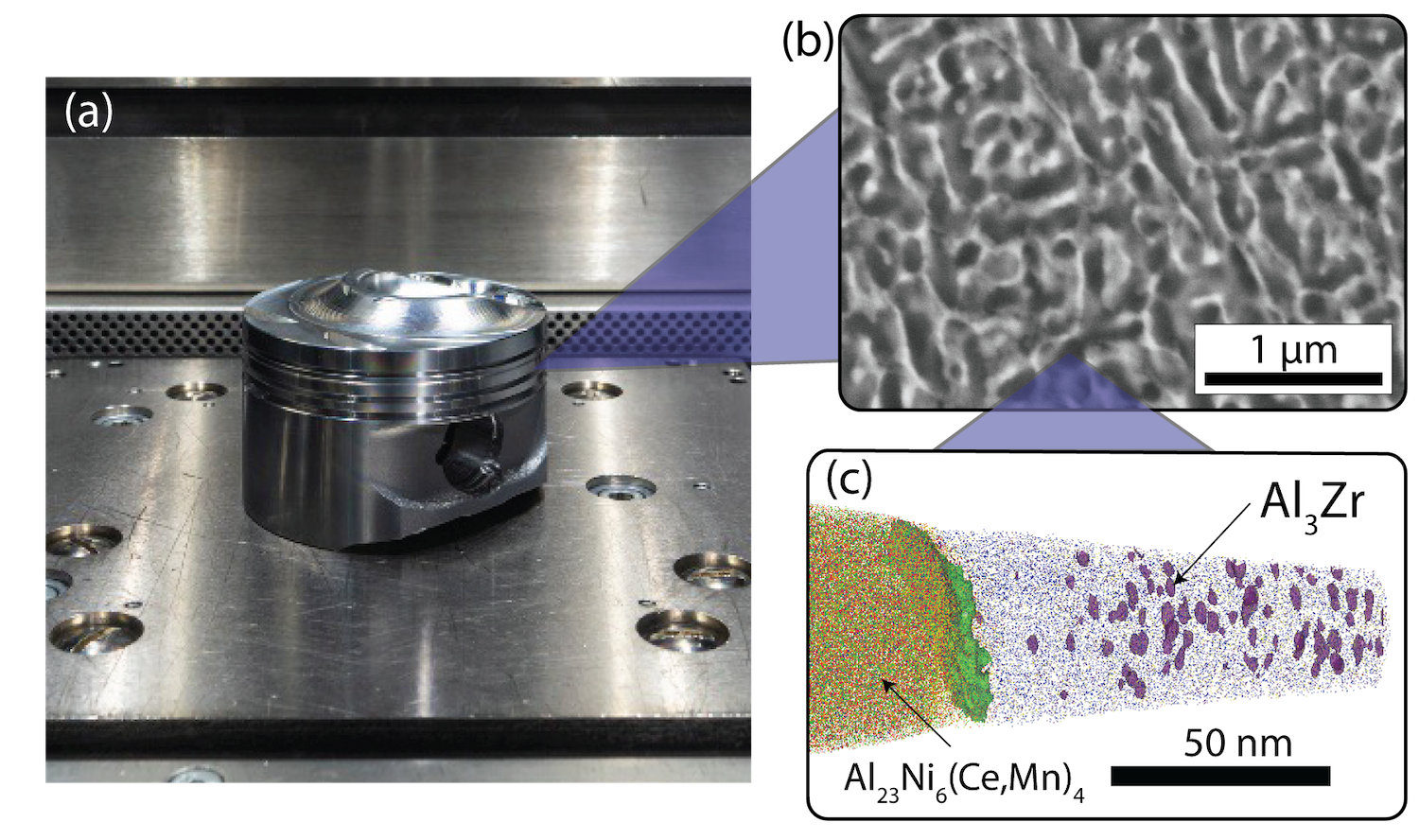
Aluminium alloys are attractive for lightweight structure because they combine low density, good strength, corrosion resistance, and high thermal conductivity. But the mechanical properties of most aluminium alloys degrade at high temperatures, especially above 200°C. In many applications requiring these temperatures — common in aerospace structure, thermal management hardware, and automotive powertrains — engineers are forced to use steel or titanium instead. Titanium is commonly used in aerospace, but is more expensive and heavier than aluminum, while also having lower thermal conductivity. Consequently, there are weight and efficiency benefits to be gained if an aluminium alloy can be designed for higher temperatures. Ideally, such an alloy should also be amenable to additive manufacturing (AM), enabling greater design flexibility, microstructural control, and performance benefits.


