

Advanced manufacturing is often discussed through conference presentations, technical papers, standards meetings, and carefully controlled demonstrations. Those formats are essential, but they can leave one question unanswered: what does adoption actually look like once the technology enters a facility, a production workflow, or a community setting?
That question sits at the centre of Manufacturing Unlimited, a new video series from ASTM International, hosted by veteran manufacturing journalist Peter Zelinski and brought to viewers by ICAM, the ASTM International Conference on Advanced Manufacturing.
Hosted by the ASTM Additive Manufacturing Center of Excellence, ICAM has become a forum for the technical conversations that determine how additive and advanced manufacturing technologies move from research into use. The conference brings together stakeholders from industry, government, academia, regulatory agencies, and national labs to address standardization, qualification, certification, materials, data, and workforce needs across the manufacturing value chain.
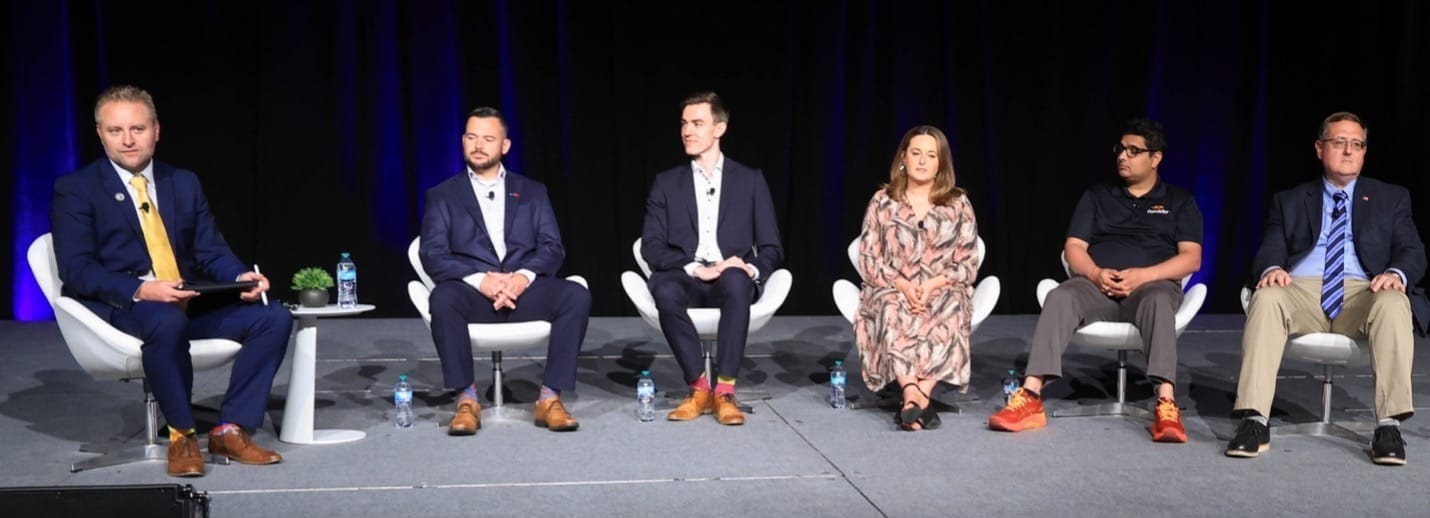
Manufacturing Unlimited extends that mission beyond the conference by taking viewers into the places where those conversations become practical. Each episode focuses on a facility, project, or process where advanced manufacturing is already being applied to solve a defined challenge.
The result is a series that connects ICAM’s technical depth with the real-world environments where adoption has to prove itself.
The first episode visits Orizon Aerostructures in Olathe, Kansas, an aerospace and defense machining supplier working with Flexxbotics to connect machining, automation, quality, tooling, and shop management into a unified digital system. While the episode begins in CNC machining, its relevance to the broader advanced manufacturing community is clear. As factories adopt more complex equipment and digital systems, the labor challenge is changing. Manufacturers still need skilled people on the shop floor, but they also need systems-level expertise that can interpret data, troubleshoot processes, and improve operations across connected equipment.
For ICAM’s audience, the episode reflects a larger theme: advanced manufacturing adoption is not only about the machine. It is about the surrounding system that allows the machine to perform reliably, repeatedly, and at scale.
Episode 2 shifts into a very different environment: a Habitat for Humanity ReStore in Austin, Texas. There, the ReCreateIt initiative is turning discarded plastic into household goods through large-format 3D printing. Plastic items that might otherwise enter the waste stream are sorted, cleaned, ground into flakes, and printed into products such as stools, tables, vases, and lampshades that can be sold in the same store.
This episode highlights another side of advanced manufacturing adoption: local impact. Additive manufacturing is often discussed in the context of aerospace, defense, medical, and high-value industrial parts. ReCreateIt shows how the same underlying technology can support circular production, community-scale recycling, workforce development, and new models for creating value from materials already present in a community.
Together, the early episodes of Manufacturing Unlimited show why ICAM remains important to the advancement of manufacturing. The technologies are different, but the underlying questions are connected. How do manufacturers scale expertise? How do they turn waste into feedstock? How do they lower barriers to metal AM? How do they build confidence without making qualification itself a bottleneck?
These are the kinds of questions ICAM was created to address. Manufacturing Unlimited brings them into the field, where viewers can see the facilities, teams, and decisions behind the technical conversation.
For the advanced manufacturing community, that field-based view matters. Adoption is no longer defined by whether a technology works in principle. It is defined by whether it can be integrated, trusted, repeated, and scaled.
That is the story Manufacturing Unlimited is documenting, one episode at a time.


