

A hybrid manufacturing system that can integrate a variety of 3D printing technologies with CNC micro-milling and drop-on-demand deposition has been launched by XYZO.
The UK-based company says it is introducing a new approach to the digital production of polymer parts with a system that brings additive manufacturing (AM), precision machining, finishing, inspection, and process control together into one connected platform.
Pitched as a 'commercially focused manufacturing technology' and not merely 'an experimental concept or research demonstrator,' the modular platform can integrate processes including Digital Light Processing (DLP), Fused Deposition Modelling (FDM), pellet extrusion, drop-on-demand deposition, and CNC micro-milling, alongside cleaning, curing, inspection and other post-processing operations.
The company says the XYZO platform has been developed following extensive research into the barriers preventing additive manufacturing from progressing from prototyping into repeatable production. Having identified that printing the part is only one stage of making the finished component, XYZO has sought to integrate the subsequent post-processing steps into the printing system. To this end, XYZO believes it has developed a controlled workflow that is capable of reducing the manual intervention between individual manufacturing stages 'dramatically.'
Kegan McColgan-Bannon, CEO at XYZO, said, “For years, the AM sector has concentrated enormous effort on improving the printing process itself. But manufacturers do not ultimately need printed parts; they need finished parts that are accurate, repeatable, and economically viable to produce. XYZO grew from asking what happens if we stop treating additive as an isolated process and instead build the production system around it. The result is much closer to an automated production line driven by additive manufacturing than it is to another 3D printer.”
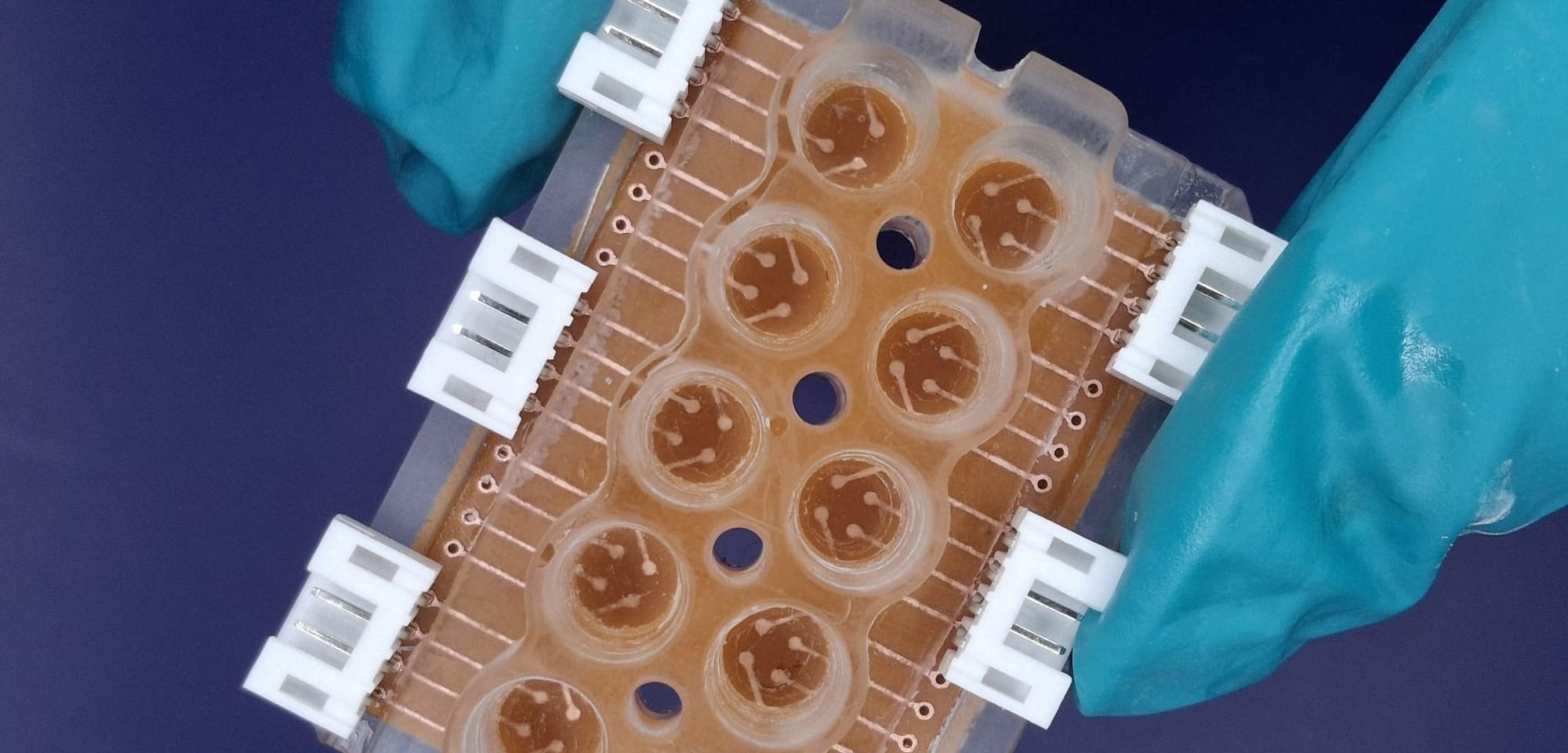
XYZO is targeting the technology at applications 'where manufacturers require the flexibility of digital production' but 'cannot justify conventional tooling.' This, the company says, includes precision prototyping, microfluidics and diagnostics, medical devices, printed electronics, defence applications, and low-to-medium-volume production.
To further enhance the proposition of the XYZO platform for manufacturers operating in these areas, the company is developing application-specific manufacturing workflows alongside customers, allowing organisations to evaluate parts and processes before moving towards pilot or system deployment.
“There is a huge difference between announcing an interesting piece of research and putting a technology in front of manufacturers and saying, give us your application and let us show you what it can do,” added McColgan-Bannon. “That is where XYZO is today. There is still enormous scope to develop the platform, but the commercial proposition already exists. We can manufacture parts, develop workflows with customers, and begin deploying hybrid manufacturing solutions around real production requirements.”


