

Chinese metal 3D printer manufacturer Addireen has unveiled an updated XH-M350G-2HR for the series production of pure copper and copper alloys.
The machine uses dual green lasers, developed in-house, with configurations of 500 W and 1KW available. It also boasts a 350 × 350 × 550 mm build volume and parameter settings for 30, 40 and 80 μm layer thicknesses.
Updates to the M350G-2HR have focused on build efficiency, stability during extended operation, and consistent results across full-build-plate layouts. Such enhancements have resulted in a pure-copper build rate reaching up to 4.24 cm³/h at a 40 μm layer thickness, and a reduction of the time spent preparing each new layer thanks to bidirectional variable-speed recoating, updated purging and chamber sealing.
Meanwhile, with green light laser technology, pure copper absorbs 532nm light at roughly eight times the rate of conventional near-infrared wavelengths at room temperature. The higher coupling directs more of the available energy into the powder and reduces the reflected load on the optical system. Combined with a focused spot diameter of 40–60 μm, it is also said to give process engineers a 'practical basis for fine-feature development.'
Long builds also depend on stable optics and controlled gas flow. Addireen has therefore revised the optical path and key optical hardware, then added active temperature control to reduce thermal drift. The chamber uses separate airflow levels: the lower flow removes smoke and spatter from the powder-bed area, while the upper flow limits deposits near the protective window. In the recorded conditions, airflow variation across the build area was 3%, and the protective window remained clean for more than 360 hours.
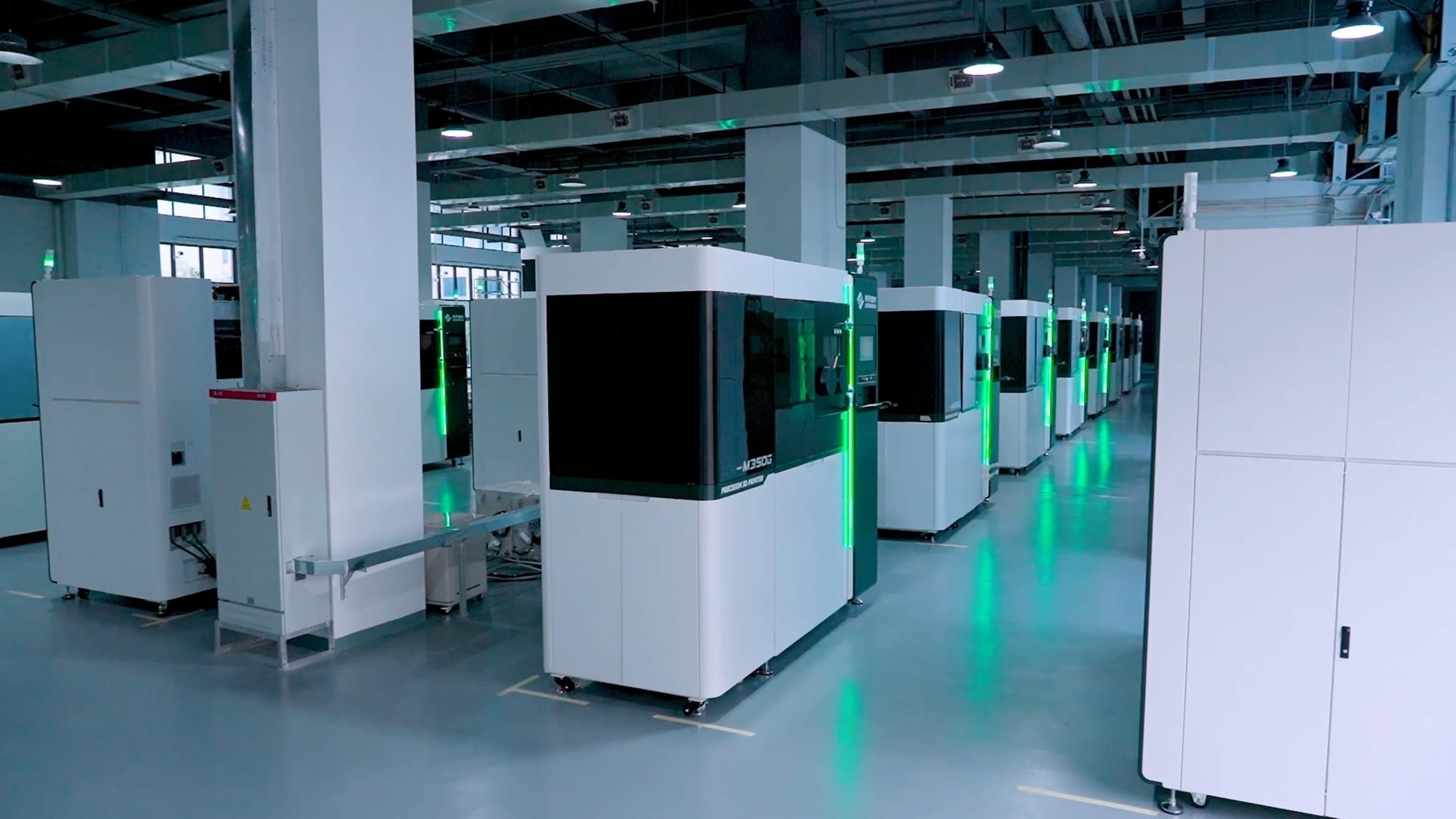
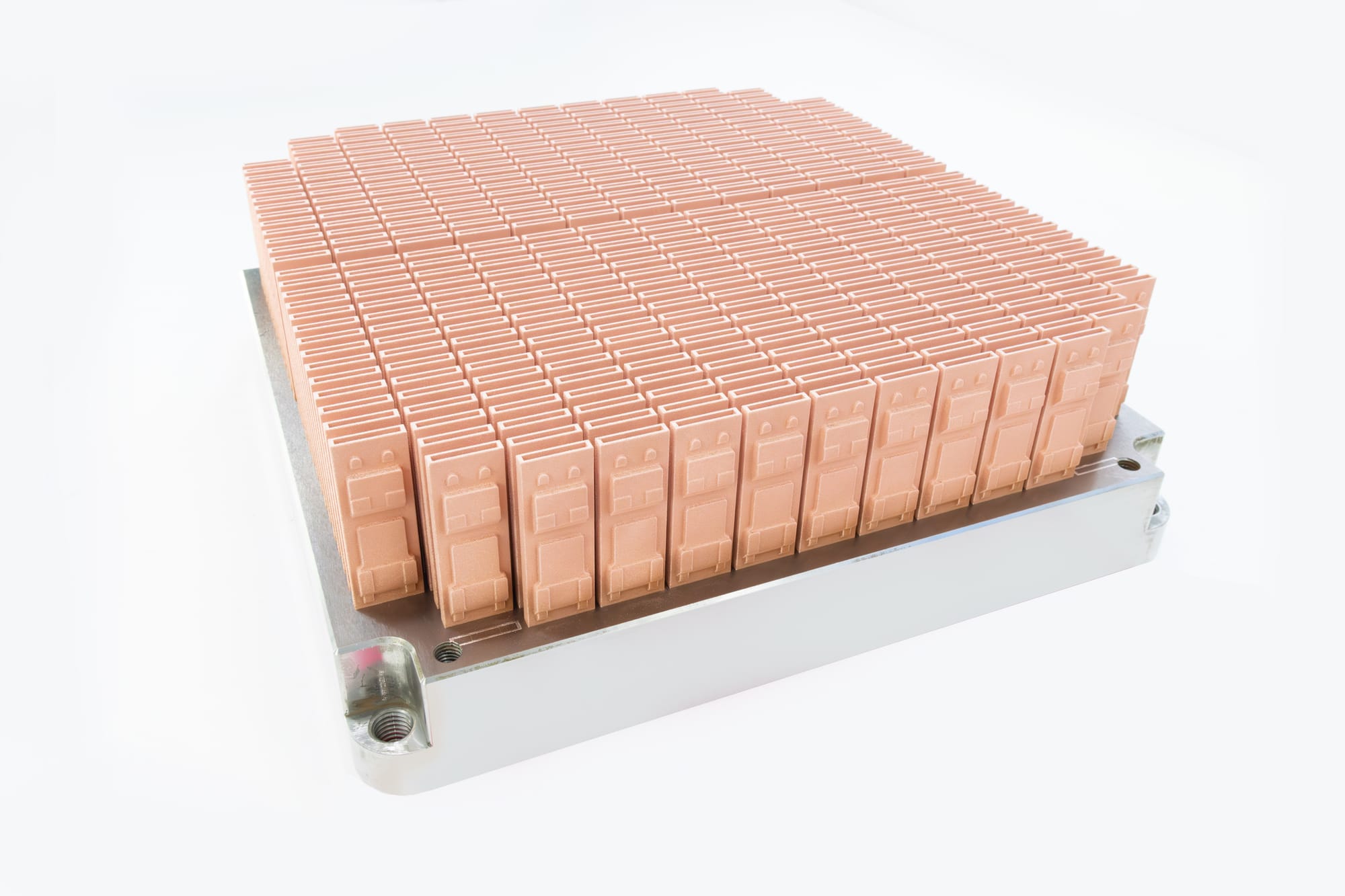
The XH-M350G series has logged more than 100,000 printing hours. A recent 140-hour build saw the production of approximately 400 pure-copper heat sinks for optical transceivers on a single build plate, with closely spaced fins and local wall thicknesses below 0.5 mm.
“For our customers, scaling up copper AM means producing more parts per build, sustaining reliable operation over long production cycles and maintaining consistent quality from batch to batch. The third-generation XH-M350G-2HR focuses on these production priorities to help customers scale their pure-copper manufacturing with confidence,” said Yujing Xu, Director of Global Business at Addireen.
Another significant update to the XH-M350G-2HR machine connects motion, recoating and monitoring in one control loop. Linear-scale feedback and servo control maintain positioning, and the powder layer is checked before laser exposure. The system records laser power and chamber oxygen for process review and traceability. In the evaluated production setup, Addireen says, dimensional consistency within the build was measured at Cpk > 1.33.
The company notes that applications where thermal or electrical conductivity is critical, such as liquid cold plates, heat exchangers, optical-transceiver heat sinks, induction coils and CuCrZr aerospace combustion chambers with integrated cooling channels, are suitable for the XH-M350G-2HR machine
Addireen introduces automated quoting platform
Alongside the updates to the XH-M350G-2HR system, Addireen has introduced the AddireenNow platform, which combines automated quoting with engineering support, metal 3D printing, post-processing and inspection.
Through this new offering, users can upload a CAD model, specify the preferred material, quantity, finishing and inspection requirements, and receive an instant quotation and estimated lead time. Addireen’s engineers then review the file, provide design-for-additive-manufacturing recommendations where needed, and confirm the production route and delivery schedule.
The service currently covers pure copper, copper alloys, AlSi10Mg, 316L Stainless Steel, Ti6Al4V and other qualified metals. Addireen says it is available for prototypes, engineering validation, small batches and recurring production orders.
“Customers need more than an as-printed part. They need a part that meets defined dimensional, surface and functional requirements,” said Xu. “AddireenNow brings the manufacturing steps into one workflow, from the initial model review through post-processing and inspection.”
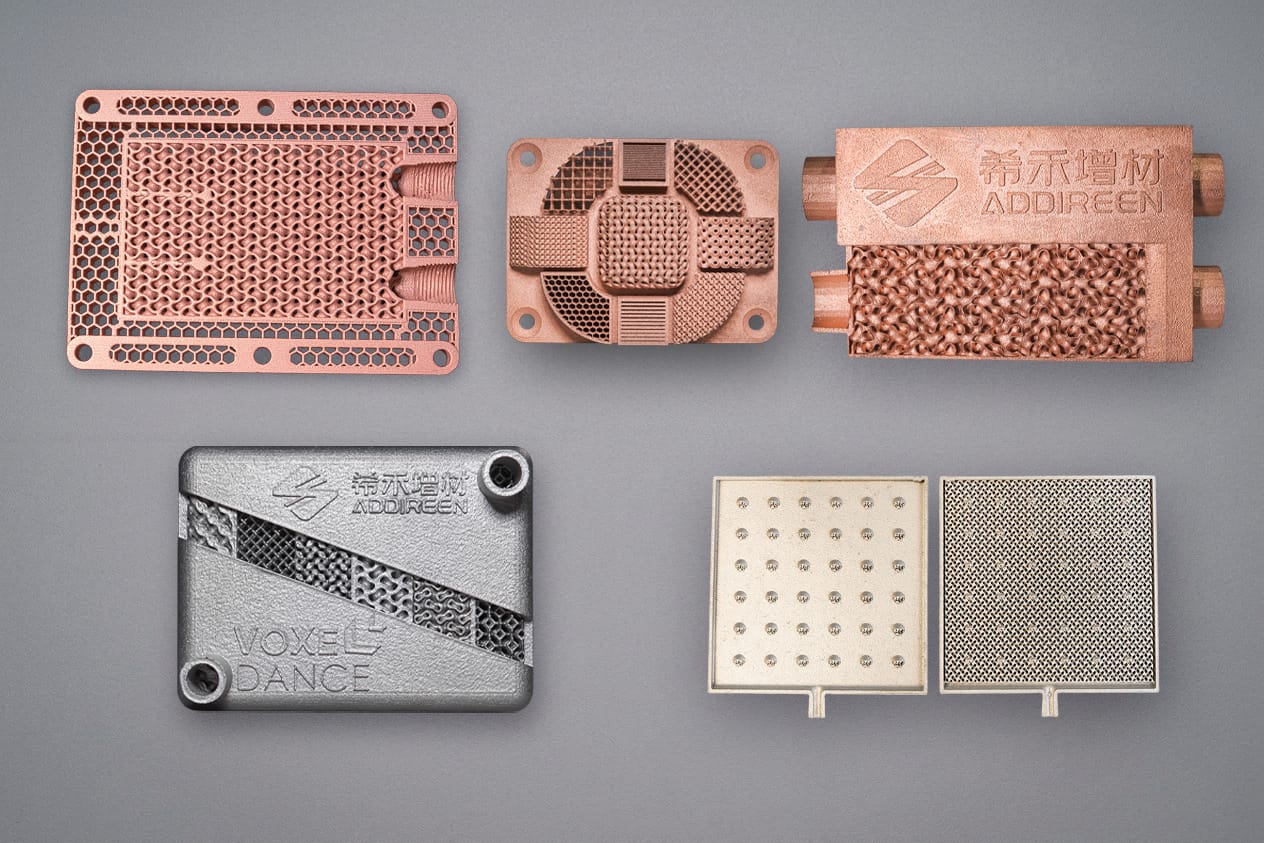
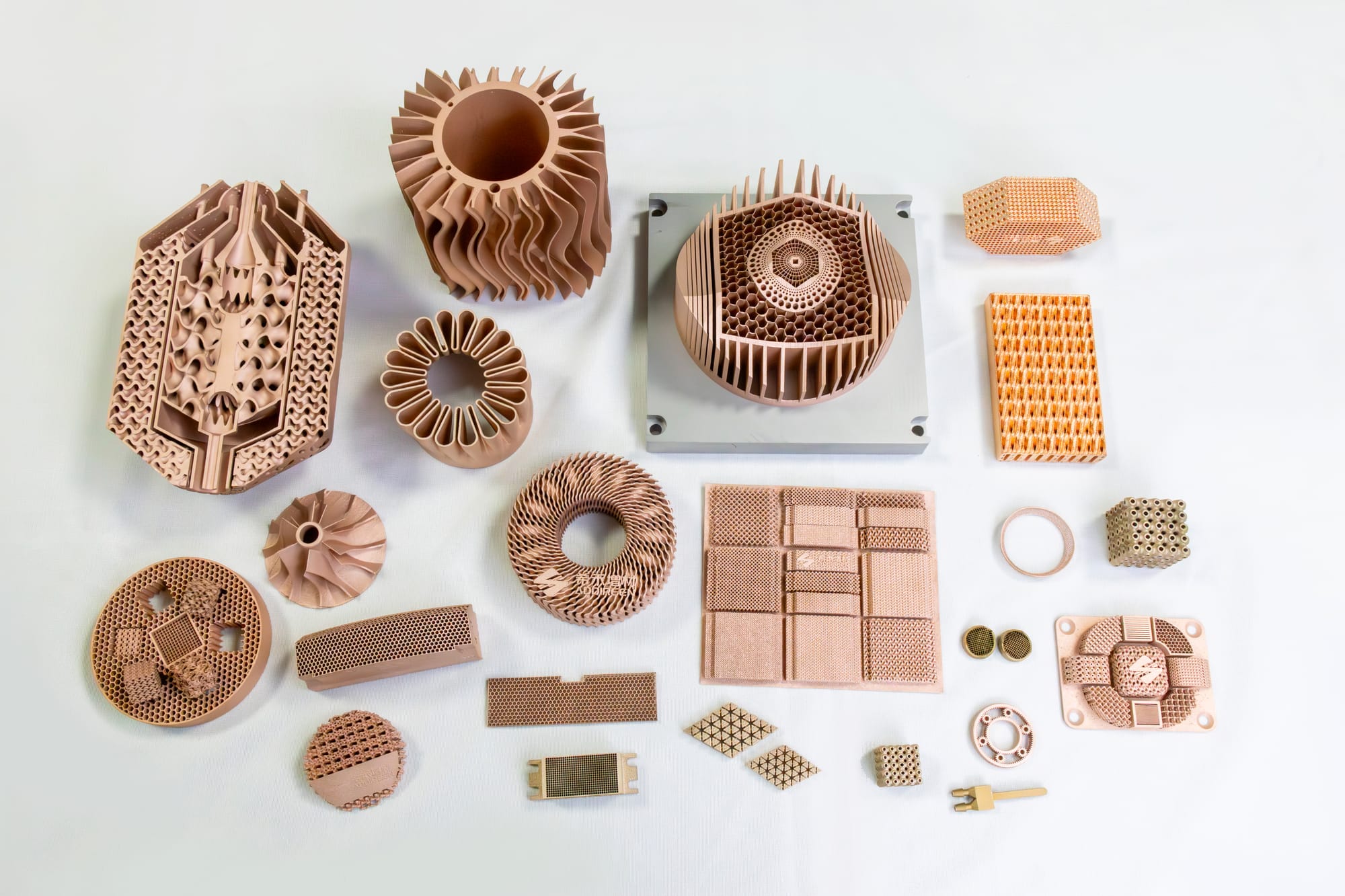
As part of this service, Addireen engineers will consider print orientation, support strategy, wall thickness, enclosed powder, internal channels, machining allowances and features that require inspection f0r every design file. They will also select the most suitable post-processing method - available services include powder removal, heat treatment, support removal, surface finishing, CNC machining, and internal cleaning - and do the same for inspection - available services include dimensional checks, surface-roughness measurement, density evaluation, metallographic analysis and application-specific testing.
The company believes that keeping these activities within one managed workflow gives the customer a single contact from CAD submission to final delivery and allows the quotation to reflect the complete production route instead of the printing stage alone.
Addireen's production network includes more than 100 metal additive manufacturing systems and over 20 post-processing and quality-assurance systems. This capacity supports a transition from prototyping to batch production. Some finishing and inspection operations are completed in-house, which can shorten handovers between stages and simplify project coordination.
The company's current application work covers thermal-management components for data centres, optical communications, aerospace, new energy vehicles, robotics and power electronics. Through AddireenNow, the company is also expanding into automotive parts, golf club heads, hydraulic manifolds, lightweight robotic structures and other industrial components.


