

Added, formerly known as Added Scientific, is to launch its new open and modular materials-deposition platform at Formnext later this month.
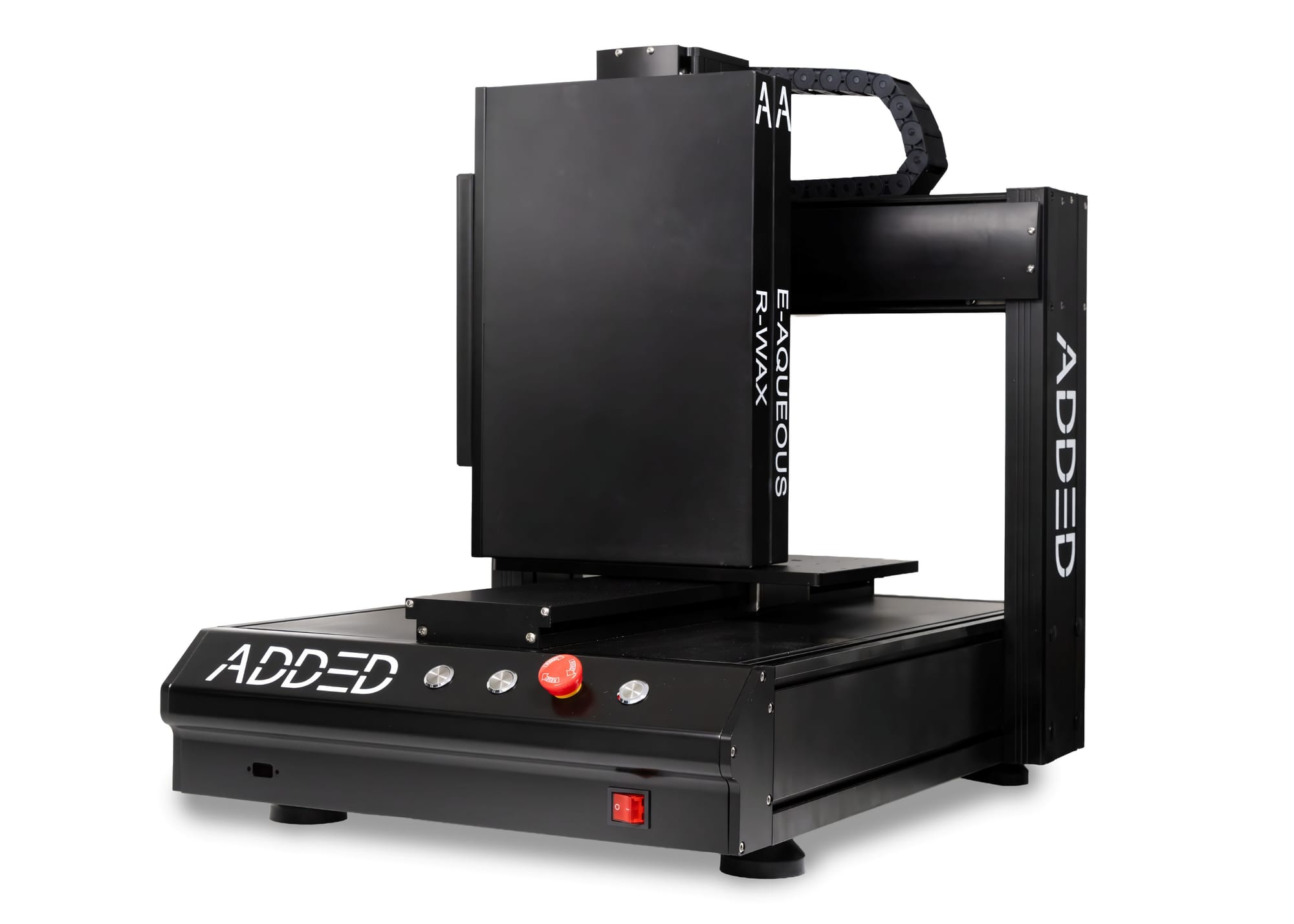
JetForge has been designed for 2D and 3D inkjet, and related deposition methods, with Added saying the technology will give researchers and manufacturers the flexibility to configure a system around the materials, processes and development requirements they need.
The technology is also underpinned by a 'unique Blade architecture.' Each Blade is described as a self-contained module incorporating a range of printing and peripheral devices, such as inkjet printheads, other high-viscosity deposition devices such as jetting valves or paste extruders, or functionalities like curing, sintering, recoating or drop watching. For inkjet printheads, the Blade contains all elements required to start work, such as drive electronics, fluid management and recirculation, material supply and associated controls. Blades operate independently using common connections, allowing users to select and combine functions for individual development and research programmes. This modular approach, Added says, allows different printheads, materials and deposition methods to operate side-by-side within a single JetForge system.
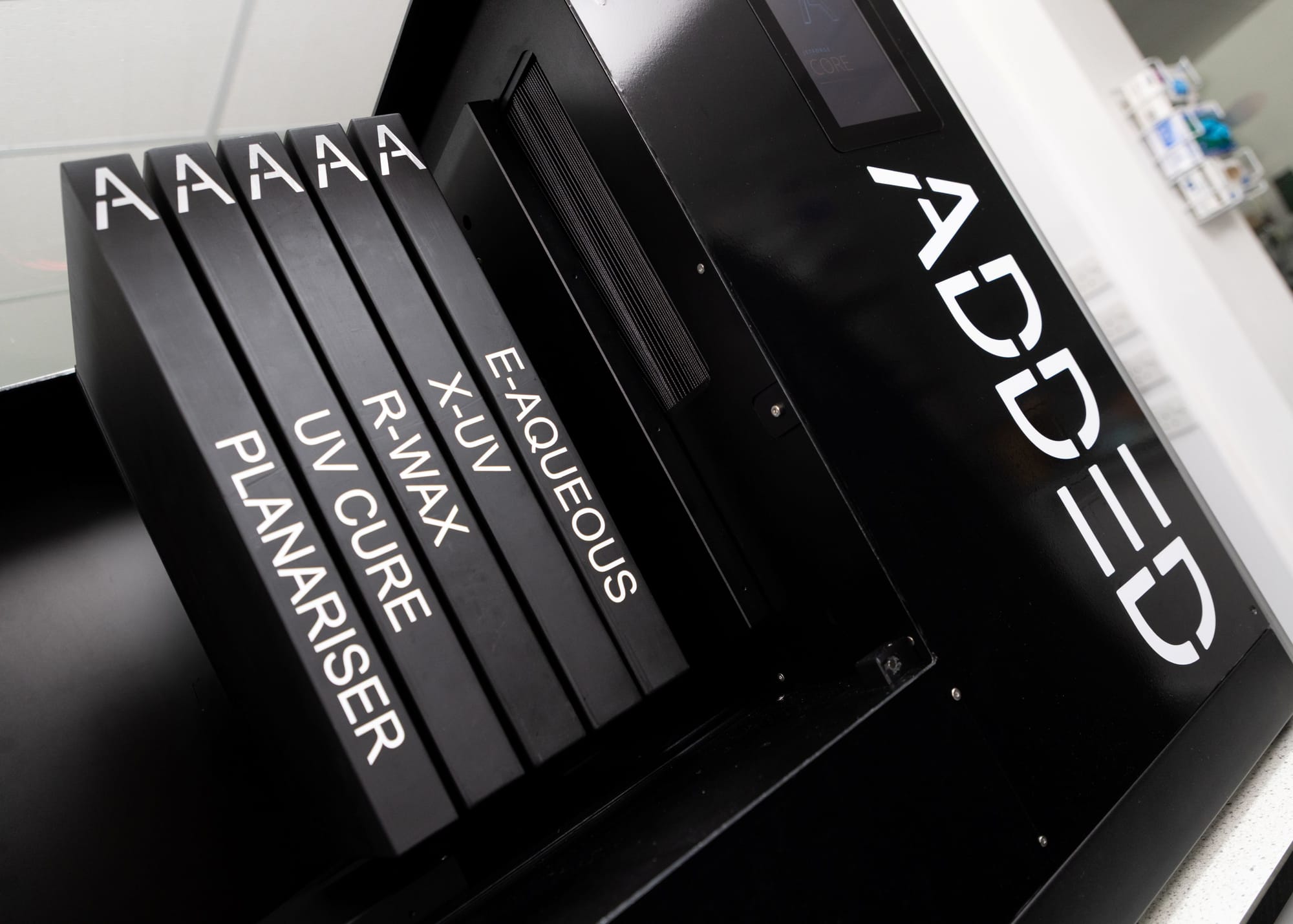
At Formnext, two variants of the JetForge are set to be introduced: The entry-level JetForge Go, which is equipped with two Blades, and the JetForge Core with six Blades. JetForge Go is said to be suitable for early-stage jetting, formulation work, and printhead evaluation, while the JetForge Core enables up to six materials in one build or four printheads with planarisation and curing modules for 3D builds. Each of these materials can be paired with the printhead or deposition method that suits it, allowing users to 'build the process around the material.' Polymers, composites, conductive, dielectric, biomaterials and magnetic materials are all compatible with the JetForge Core.
Every Blade mounts and connects in the same way in both the JetForge Go and Core, so deposition, levelling and curing are all handled through a single interface. Materials or printheads can be changed by simply swapping a Blade, without the need to rebuild the system.
“JetForge was born out of our contract research work,” said Christopher Tuck, Co-Founder and Director at Added. “When we couldn't find the capability and flexibility required to deliver our clients' projects, we developed it ourselves. We now use the platform daily, and by making it available to others, we hope to support the development of more materials for inkjet and related deposition approaches and help researchers and manufacturers bring new applications to market faster.”
“We designed the JetForge to provide access to its full capabilities from day one,” added Richard Hague, Co-Founder and Director at Added. “There are no paid upgrades or locked features, and users will have a high degree of control over the platform’s functionality. Most Blades are transferable between the JetForge Go and JetForge Core and can also be purchased separately, making it easier to adapt the system as research requirements develop.”
Added will premiere the JetForge Core on its Formnext stand (Hall 12.0, Stand F139), while the JetForge Go will be exhibited on the Ricoh stand (Hall 11.0, Stand E58).


