
ASTM International’s additive manufacturing committee has put forward a proposal to standardise the design process for ceramic parts made with additive manufacturing.
The guide, which has a working title of 'New Guide for Additive Manufacturing – Design – Parts using ceramic materials' (or WK84355), aims to establish rules for the design of 3D printed ceramics parts, specifically, to help manufacturers to 'avoid shrinkage and embrittlement in AM ceramic product composition'.
The rationale, which has been set by ASTM Committee F42 on Additive Manufacturing Technologies, is described as follows:
"The market of AM of ceramics has been growing at a fast rate since 2010 and is now reaching the general market. As designing ceramics is very different from other materials, special rules have been established, but these do not comprehend the aspects of AM. This NP will simplify designing and using of ceramic parts made with AM. Other than standard production methods, AM offers the possibility of integrating many functions into one part. This makes parts form AM lighter, less material intensive and more durable than traditional parts, but only if the characteristics of the individual AM processes are taken into account. This NP will give a simple and comprehensive set of rules to make this possible. It is aimed at designers and developers in industry and research."
“Ceramics are known to be useful for their strength, heat resistance, hardness, chemical inertness and electrical insulation properties, while also being brittle and undergoing shrinkage during the final sintering process,” says Brandon Cox, lead engineer with Electron Optics Lab and ASTM member. “This guide could help customers and regulators evaluate whether AM ceramic parts were designed properly based on related technical needs.”
In an announcement, ASTM said the effort is linked to the United Nations Sustainable Development Goal #9 on industry, innovation and infrastructure.
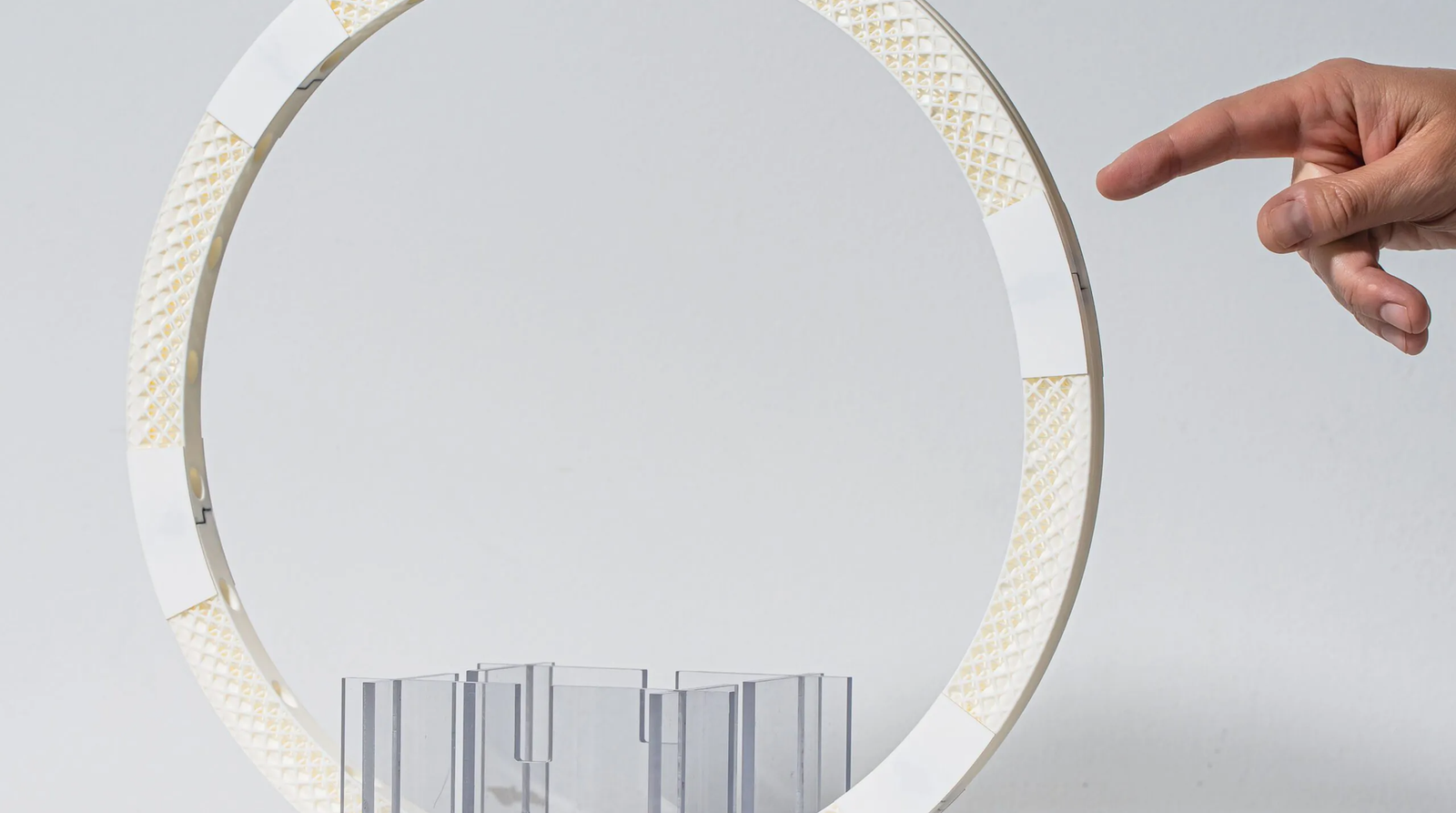
Application spotlight: 15-inch 3D printed gas distribution ring for semiconductor applications
How Plasway harnessed additive manufacturing for the manufacture of ring segments for a semiconductor gas distribution ring is used in the atomic layer deposition (ALD) process.


