

The RMS220’s extra 100 mm of build height makes room for taller parts and bigger batches. At Formnext 2026, the European debut of the B520 sandblaster shows how those builds move from printing to finishing.
A 450 mm automotive light cover makes a good case for a taller SLS printer. Raise3D printed the cover in one piece on its RMS220 using PA NEXT powder. For a component with a long, visible surface, a single print removes a joining operation and the seam that comes with it. For a production team, though, those same 100 millimetres might be most valuable on a job where every part is small.
At Formnext 2026 in Frankfurt, Raise3D will show the RMS220 with a build envelope of 220 × 220 × 450 mm. The additional Z-axis height takes nominal build volume from 16.9 to 21.8 litres, an increase of nearly 30%. Raise3D says the software and firmware update will roll out on 17 November, free of charge for existing RMS220 owners, with no hardware changes required.
Sharing the stand will be the B520 sandblaster, making its European debut after its unveiling at RAPID + TCT in Boston in April. Together, the two developments pose a practical question for anyone bringing selective laser sintering in-house. Once the printer can deliver more parts in a single job, how quickly can the team turn them into a finished batch?
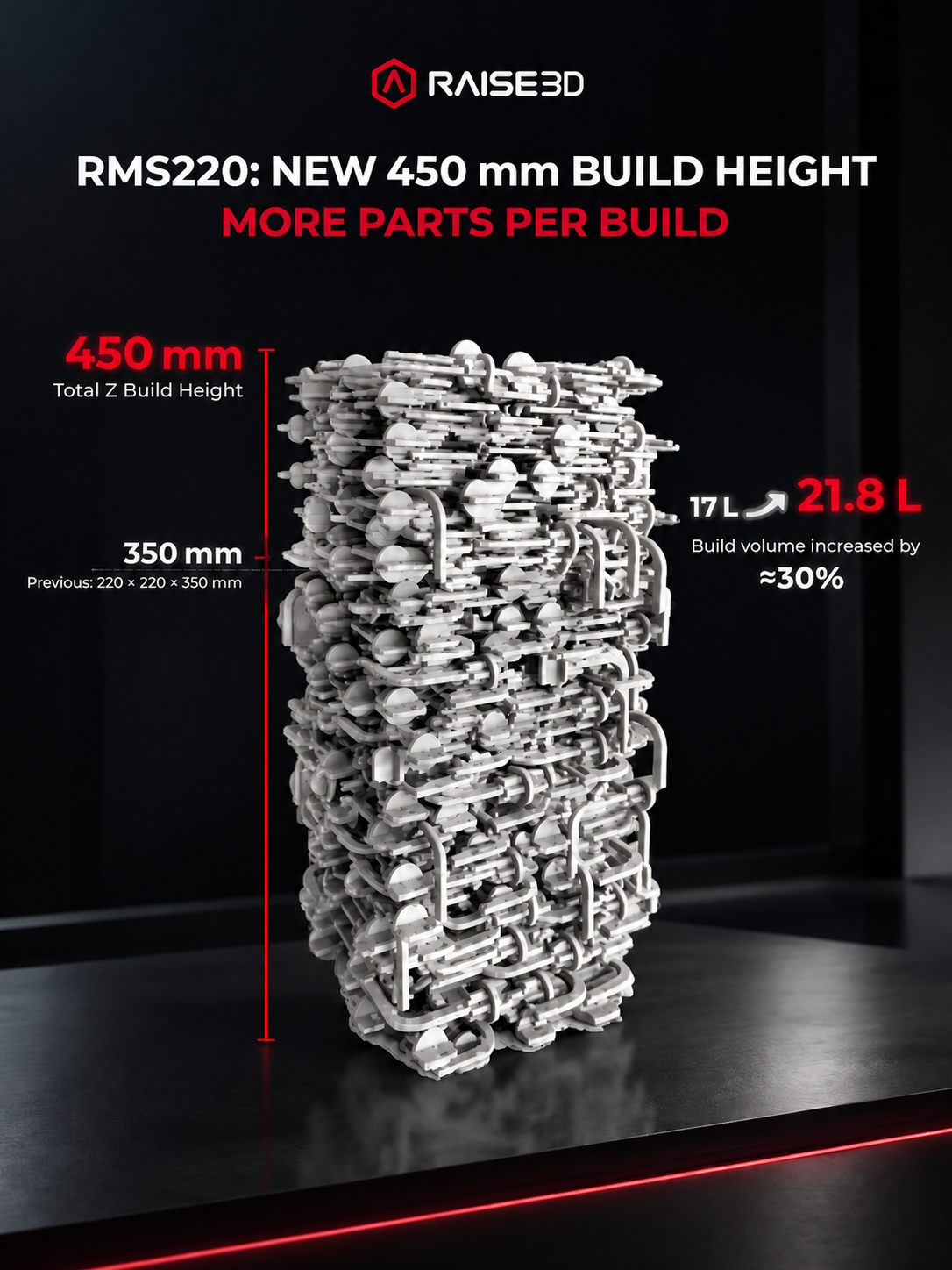
Print Larger Parts in One Piece
The light cover illustrates the design opportunity. Printing in one piece eliminates the need to align and bond separate sections, saving assembly labour and post-processing time. It can also improve structural integrity by removing potential weak points at bonded joints. On a visible surface, eliminating the join avoids a seam and the risk of defects where sections meet.
The extra height also gives engineers more freedom to choose an orientation that suits the part’s critical surfaces and dimensions. How much of the envelope they can use depends on the geometry and the design and print guidelines for the chosen material.
Getting More Parts Out of Each Build
On a small-batch job, the extra space can be used to nest more components vertically. In SLS, the surrounding powder supports the parts as they build, so components can be arranged at different heights in the chamber. A service bureau could fit more of a recurring order into one run. An in-house team could use the space for a mix of fixtures, housings and spares that share a material and process profile.
Fitting more parts into each job can reduce the number of builds needed to fulfil an order. That means fewer setups and less idle time between runs, while spreading preparation and handling costs across more parts can lower the cost per part. Raise3D estimates that throughput can increase by 25–30% in typical small-batch production scenarios. The gain depends on how efficiently parts nest, how much print time the additional layers add, and how quickly the batch moves through cooling, cleaning and finishing.
Keeping the Next Job Moving
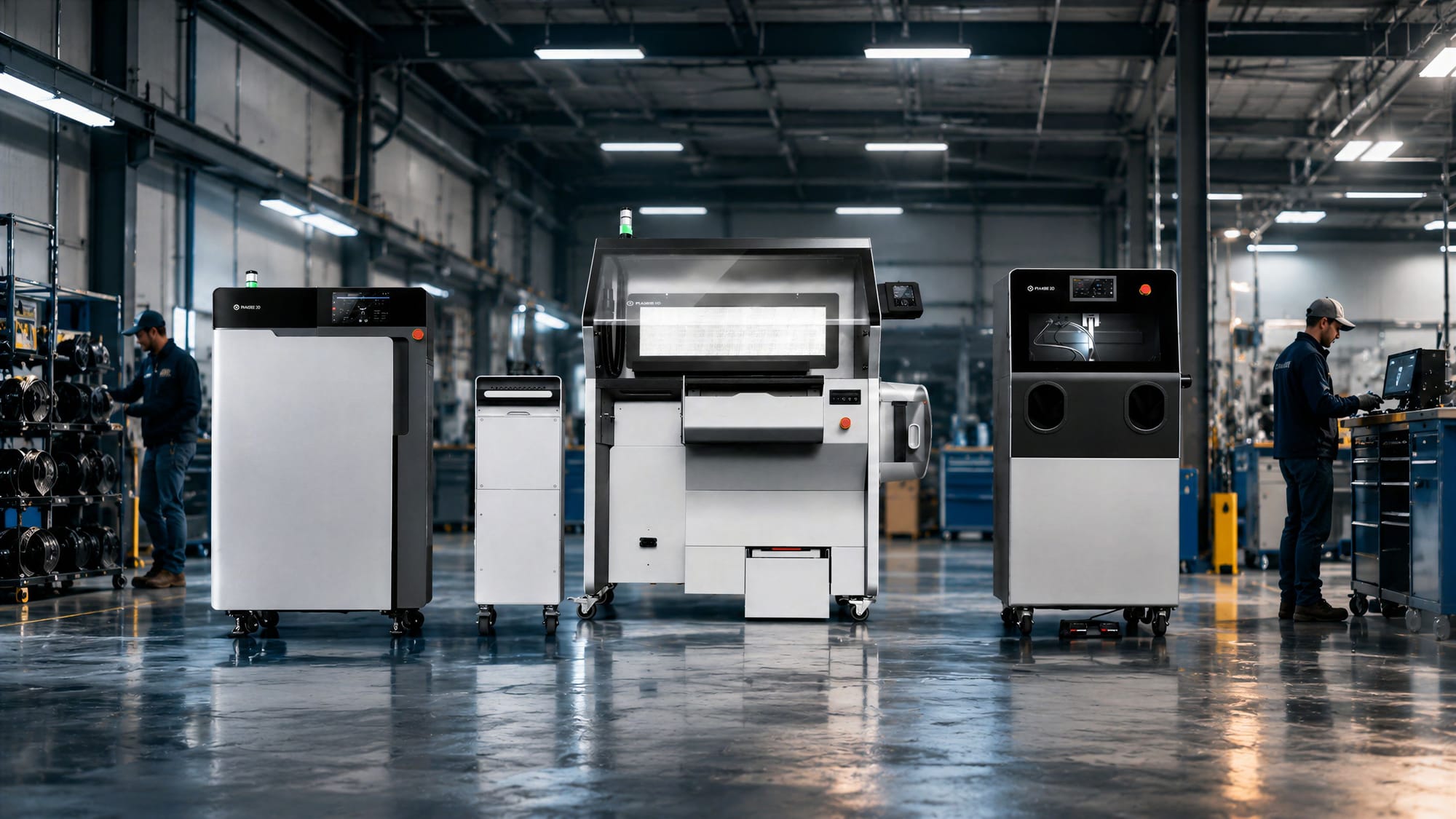
The RMS220 uses interchangeable Build Unit 220 chambers to overlap printing with cooling. When a print finishes, the operator can remove the build unit and let the powder cake cool outside the printer. With a second unit prepared, the printer can start the next job while the first build cools. For a team running repeat orders, that separation matters because a build can still be hours away from unpacking when the printer is ready to run again.
Once the build has cooled, it moves to the C220-P cleaning station. Here the operator separates the parts from the bulk unsintered powder and recovers powder for potential reuse according to the material’s refresh requirements. A bigger batch may contain dozens of individual pieces to retrieve, while a tall, one-piece component presents a different handling task. After bulk powder recovery, blasting can remove residual powder from surfaces, around details and in accessible recesses.
If build units come out of the printer faster than operators can unpack them or finish the parts, work accumulates between stations. Tracking cooling, cleaning and finishing alongside print time shows where the extra build capacity can translate into shorter delivery times.
Making Finishing a Batch Operation
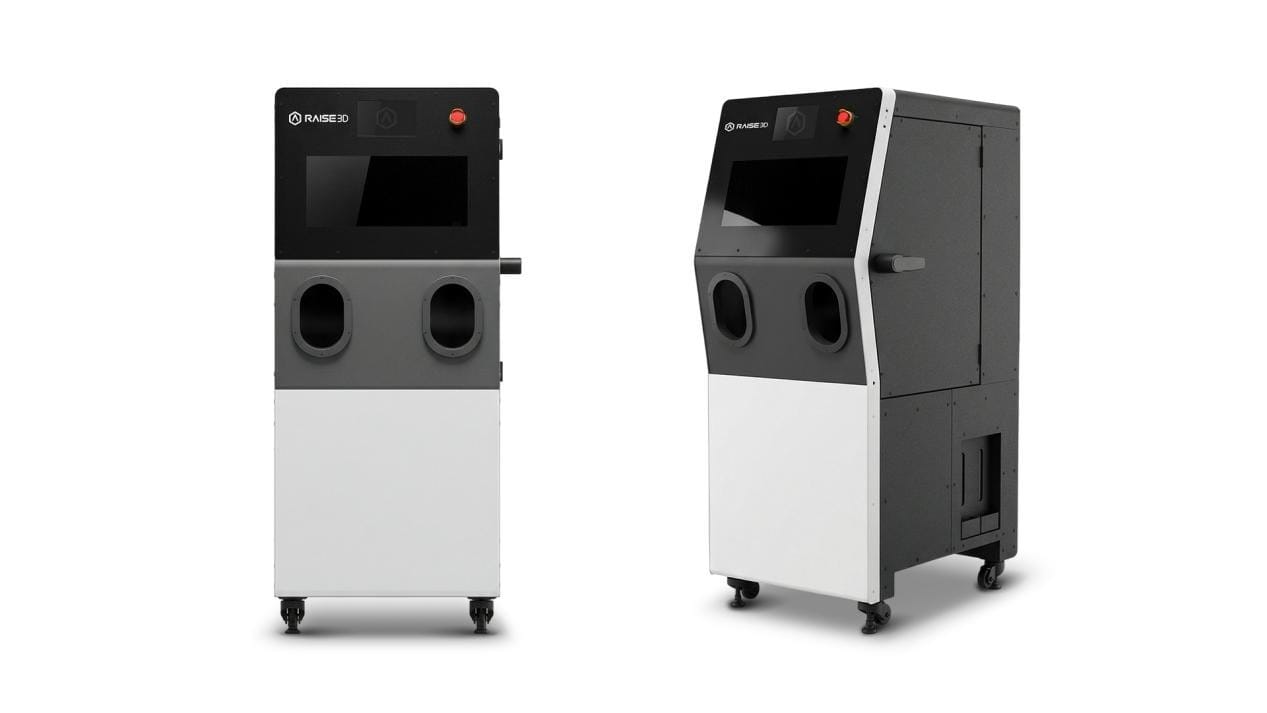
The B520 takes on the repetitive blasting work that follows unpacking. In automatic mode, a removable basket holds suitable parts for a programmed cycle in an enclosed chamber. Raise3D specifies a recommended load of 10 litres for the standard basket and 30 litres for the large basket. How many parts fit in a cycle depends on their shape, fragility and how freely they can move in the basket.
For batches of similar parts, programmable blasting gives operators a process they can repeat across orders. A tall cover, a delicate feature or a geometry with areas that are hard to reach may call for individual attention. The B520 also supports manual blasting, and an optional polishing module gives users another route when the application calls for a different finish. A fixture destined for the factory floor and a housing intended for a customer demonstration can therefore follow different finishing routes through the same production system.
“With the introduction of B520 along with our expanding powder portfolio, Raise3D now delivers a complete SLS workflow, covering material, printing, and post-processing. This integrated ecosystem enhances production efficiency, ensuring consistent part quality and enabling scalable manufacturing. It reflects our commitment to providing a fully optimized solution that supports diverse applications and evolving industrial needs,” said Edward Feng, Global CEO of Raise3D.
Raise3D plans to show the RMS220 production system at Formnext, 17–20 November 2026, in Hall 12.1, Booth D21. Visitors can see how the interchangeable build units, cleaning station and B520 handle the output from a bigger build. Following its European debut at the show, the B520 sandblaster is scheduled to begin shipping in December 2026.


