

UK launch services company Skyrora has completed a 45-second static hot-fire test of a scaled-down version of its Skyrora XL orbital launch vehicle.
Skyrora XL is a three-stage, light-class launch vehicle intended to place payloads into Sun-Synchronous Orbit (SSO) between a range of 500km and 1,000km in altitude. Like many of Skyrora's products, the company is leaning on additive manufacturing technology to design and manufacture the launch vehicle.
The static hot-fire test was carried out at Machrihanish on the west coast of Scotland and marks 'another important step' in the development of the company’s orbital launch vehicle.
Skyrora built the test vehicle to validate subsystems and components similar to those that will be used in the full-scale Skyrora XL vehicle. It is typical of the company's approach to testing, with Skyrora often testing systems together at a smaller scale to identify and address engineering challenges earlier in the development programme. This, the company says, reduces risk and provides further evidence of component and subsystem performance before scaling up through an extensive programme of progressively larger and more demanding trials and integration.
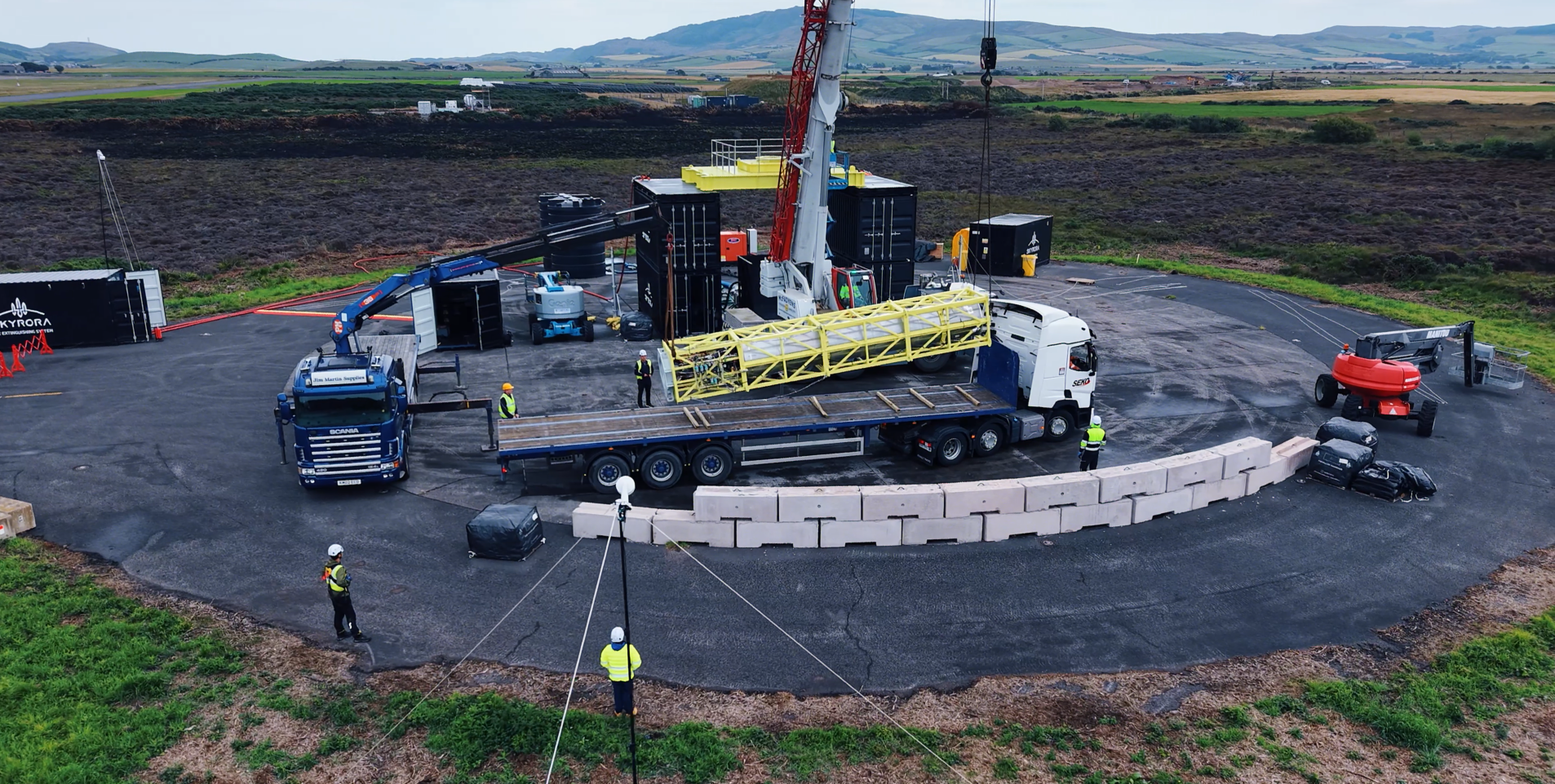
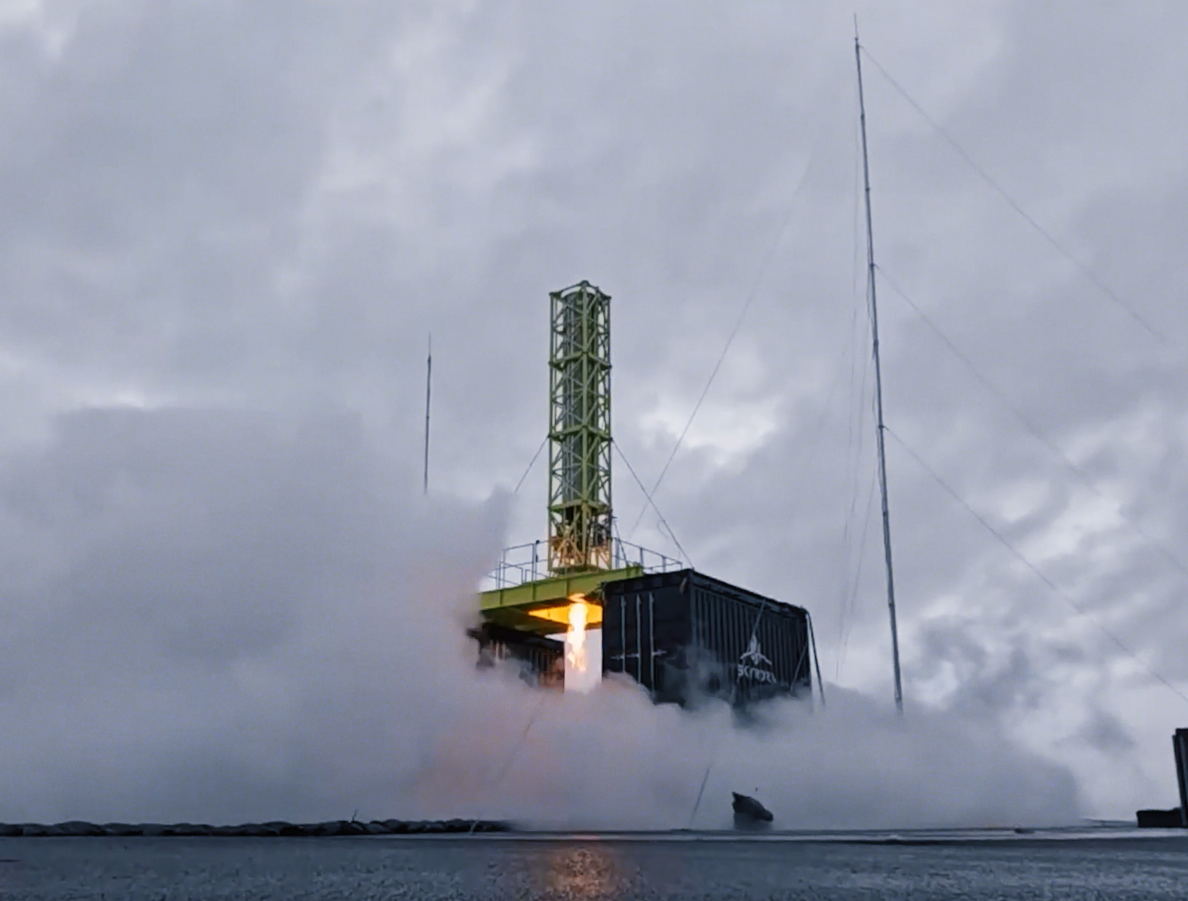
This most recent test gathered data on the vehicle’s pressurisation system and critical engine characteristics, including propellant flow rate and chamber pressure. Per Skyrora, initial data indicates that the subsystems operated successfully throughout the test, with its engineering team is now collating and analysing the results before conducting a second test.
“You don’t build confidence in an orbital launch vehicle by waiting until the finished rocket is on the launchpad. You build it through thousands of decisions, measurements and tests along the way,” said Skyrora COO, Dr Jack James Marlow. “This scaled-down XL system lets us test and validate the technology, subsystems and components together, understand how they perform and make improvements before scaling up to the full vehicle. Our approach is simple: test, learn, refine and test again, so that when Skyrora XL reaches the pad, we have confidence grounded in evidence.”
Earlier this month, Skyrora completed a hot-fire test campaign of its 3D printing-enabled 3.5kN LEO engine, which has been designed as an upper stage engine for the Skyrora XL. The engine tested a few weeks ago featured a titanium-coated component manufactured with the company's Skyprint 2 DED system.


