

UK launch services company Skyrora has completed a hot-fire test campaign of its 3D printing-enabled 3.5kN LEO engine.
The engine is said to feature an advanced titanium-coated component developed through the European Union-funded MADE-3D programme, a Horizon Europe research initiative focused on multi-material additive manufacturing.
Skyrora carried out the test campaign at its Midlothian testing facility, achieving its planned technical objectives and representing a 'significant milestone' in the development of 'next-generation manufacturing technologies for the space sector.' The company's work within the international MADE-3D consortium has now concluded.
Deploying its internally developed Skyprint 2 hybrid DED 3D printer, Skyrora has engineered a titanium-coated component that is designed to improve performance in the demanding thermal environment experienced during rocket engine operation. By using titanium instead of a nickel-based alloy, Skyrora is said to have reduced weight by approximately 44%.
The company carried out six fire tests during this test campaign, with no damage within the modified engine components being reported. These tests, Skyrora says, validate the manufacturing approach, its suitability for future propulsion systems, and the excellent performance under high temperatures and loads of the engine components.
Unlike conventional manufacturing methods, the technologies explored through MADE-3D enable components to be produced using multiple materials within a single manufacturing process, allowing engineers to optimise different sections of a component for strength, weight and thermal performance. For launch vehicles, Skyrora suggests, these advances could reduce manufacturing complexity while improving overall engine efficiency and performance.
Jordan McCormick, Design and Test Engineer at Skyrora, said: "One of the biggest challenges in advanced manufacturing is moving promising technologies beyond the laboratory and proving that they can perform in real operating environments. Successfully completing this hot-fire campaign is an important demonstration of that process.
"Through MADE-3D, we've worked alongside outstanding European partners to explore new approaches to additive manufacturing that could reshape the design and manufacture of propulsion systems. Bringing those innovations into a functioning rocket engine and testing them under live firing conditions represents an important milestone for both the consortium and Skyrora."
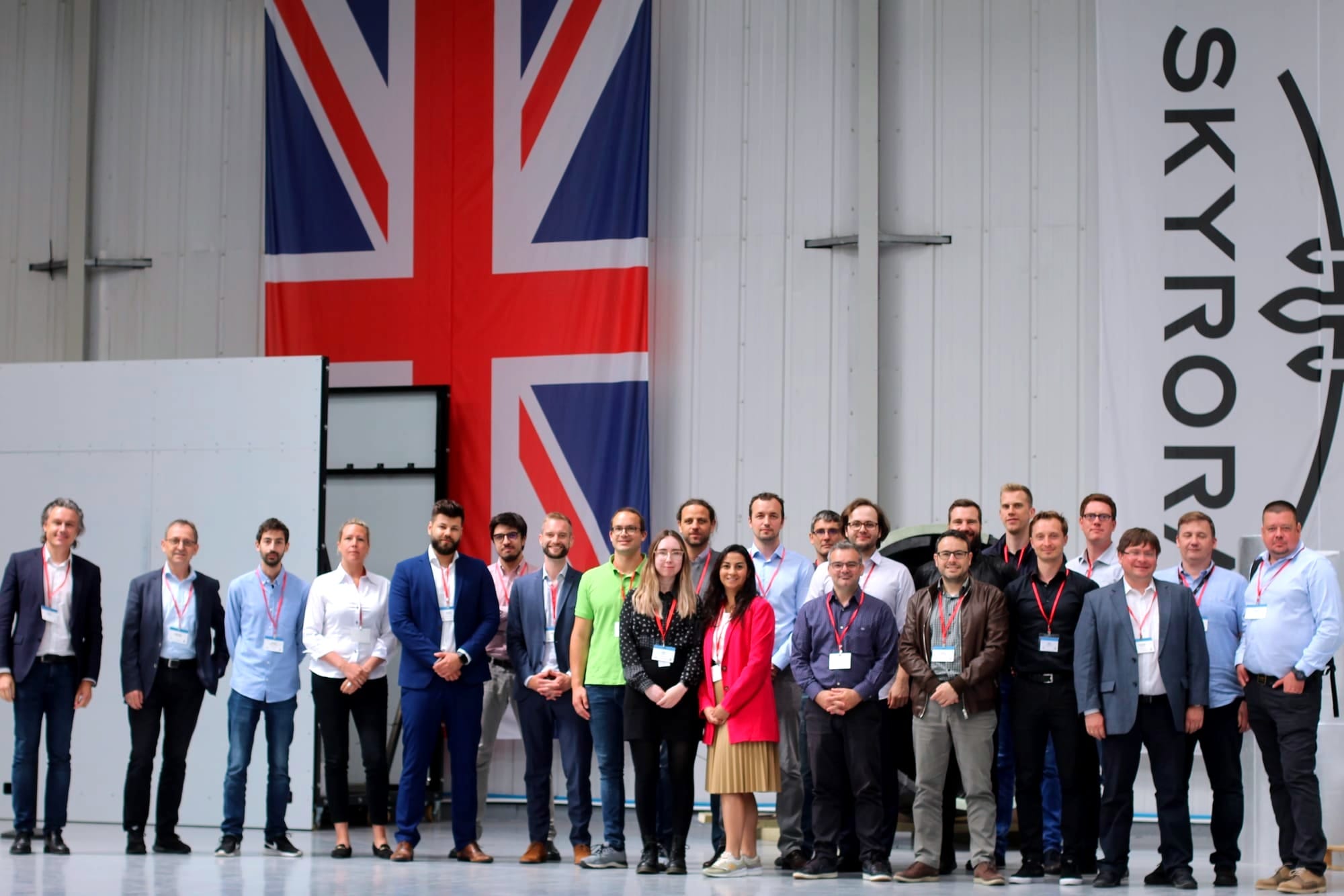
Throughout the MADE-3D programme, Skyrora has contributed its expertise in rocket propulsion, additive manufacturing and engine testing to help demonstrate how advanced manufacturing techniques can be applied to complex aerospace hardware. The consortium's work aims to accelerate the adoption of innovative manufacturing technologies across Europe's space sector, supporting the production of lighter, more efficient and more resilient components for future launch systems and spacecraft.


