

Carbon's Digital Light Synthesis 3D printing technology has been used to manufacture more than one million cycling saddles, according to the company.
Eleven brands are said to have partnered with Carbon and its production partners to manufacture bike saddles, with more than 60 saddle models in production.
Carbon says the milestone reflects the growing role of DLS technology in high-performance cycling, as well as the capabilities of its digitally programmed lattice structures to deliver 'precisely tuned cushioning, support and mechanical performance.'
“Reaching one million saddles is an important milestone, but it represents much more than a production number,” said Phil DeSimone, CEO of Carbon. “It shows what happens when digital manufacturing moves beyond prototyping and becomes a trusted way to make products at meaningful scale. Together with saddle brands and production partners, we have created an entirely new category of cycling products – moving from the first applications of lattice technology to products being ridden every day by consumers and by athletes competing at the very highest level of the sport.”
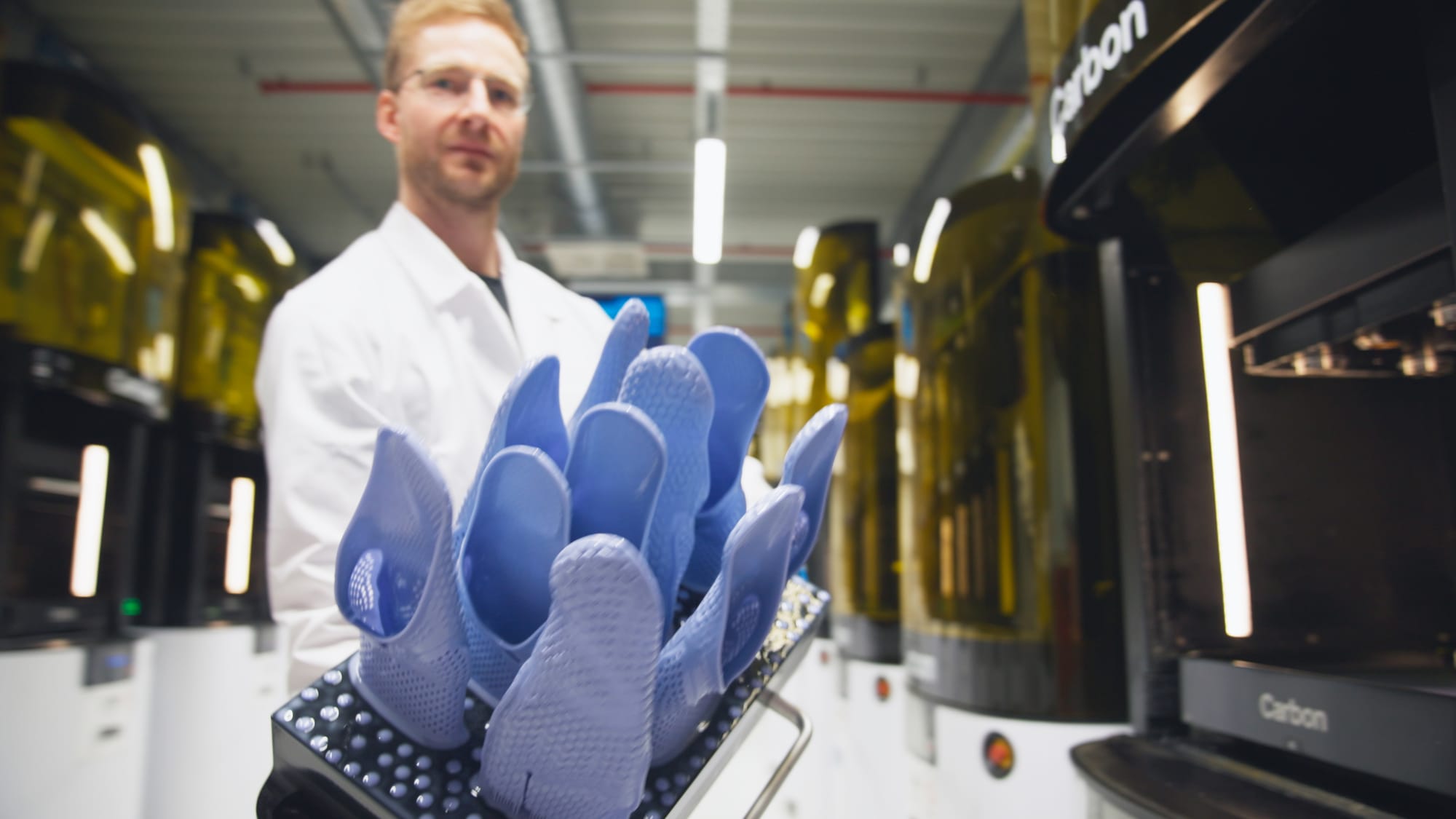
With DLS technology, brands have been able to replace traditionally manufactured foam cushioning with programmable lattice structures whose mechanical response can be tuned across different areas of a saddle. Notable applications of these saddles include Tadej Pogačar using a custom fizik Argo Adaptive saddle at the 2026 Tour de France.
Carbon has also noted that Selle Italia is one of the latest brands to adopt a DLS-produced saddle through the launch of Unica. Unica, manufactured by Carbon partner Prototek and described as the second fully customisable saddle made with the Carbon platform, uses pressure-mapping data captured from the individual cyclist to engineer a unique internal lattice structure around that rider’s pressure distribution, manufactured in Carbon’s EPU 46 material.


