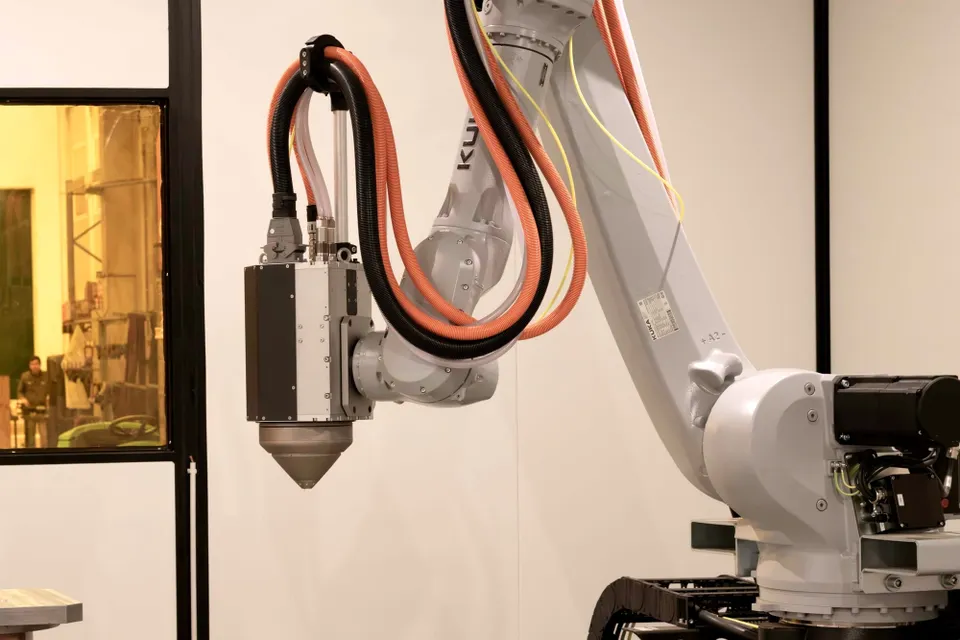
Continuous Composites has filed a patent infringement lawsuit against Anisoprint S.a.r.l. and Anisoprint 3D Printing Technology (Suzhou) Limited (now operating under the brand name FibreSeek).
The developer of the patented CF3D composite 3D printing technology alleges that FibreSeek's products, including the recently launched FibreSeeker 3 continuous fibre 3D printer, infringe ten US patents owned by Continuous Composites. These patents cover foundational technologies for continuous fibre composite additive manufacturing.
According to Continuous Composites, the IP lawsuit has been filed after approximately three years of the company attempting to resolve the matter through licensing discussions. In 2023, Continuous Composites claims to have engaged FibreSeek in talks regarding a commercial licensing agreement, with a licensing term sheet intended to establish a commercial framework that would allow FibreSeek to continue operating while respecting Continuous Composites’ intellectual property rights presented in June 2024. The company says additional attempts to discuss a licensing agreement were made throughout 2024 and 2025, but having not borne fruit, it is now pursuing legal action.
Since filing the industry’s earliest patent application directed to continuous fibre additive manufacturing in 2012, Continuous Composites has built an extensive IP portfolio consisting of more than 120 allowed U.S. patents and more than 40 international patents. Continuous Composites previously litigated against MarkForged for IP infringement, with a multi-year dispute culminating in a settlement agreement worth tens of millions of dollars paid out to Continuous Composites.
At the centre of this lawsuit are patents covering methods and systems for manufacturing structural composite parts by combining continuous reinforcement fibres with polymer matrix materials during the additive manufacturing process. Continuous Composites alleges that FibreSeek’s products 'utilise a similar continuous fibre co-extrusion approach' that 'falls within the scope of multiple patented inventions developed by the company over more than a decade of research, engineering, and commercialisation.'
“This lawsuit is not about a single patent or isolated feature,” said Steve Starner, Chief Executive Officer of Continuous Composites. “The complaint alleges infringement across ten separate U.S. patents covering core technologies that helped establish continuous fibre additive manufacturing as a viable manufacturing process. We did not rush into litigation. For nearly three years, we pursued what we believed was the right path: direct engagement, good-faith discussions, and multiple opportunities to reach a licensing agreement. Litigation became necessary only after those efforts failed to produce a resolution.
“These patents represent almost fifteen years of investment, engineering development, testing, and commercialisation. Our employees, customers, partners, and investors expect us to protect the innovations they helped build. We have a responsibility to defend that investment.”
FibreSeek has been approached by TCT to provide a comment. Continuous Composites has said that it will not make any further comment on these allegations beyond those contained in publicly filed court documents.