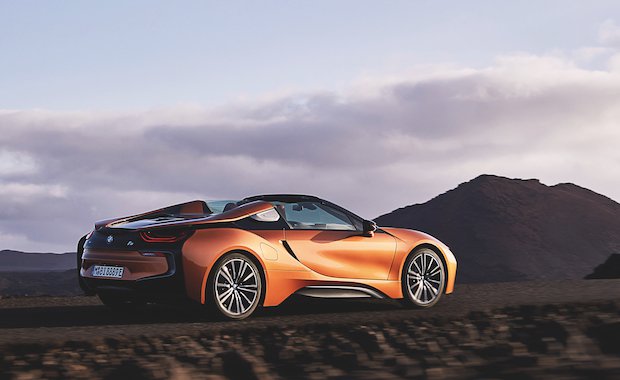
BMW Group says it is investing in new systems, larger build volumes and digitally connected process chains as it plans to take additive manufacturing 'to the next industrial level'.
The automotive company, which has been using the technology since the early '90s (BMW was the recipient of EOS's first Stereos 400 system back in 1990), says AM has become a 'relevant building block throughout the vehicle lifecycle', and is now an established part of its daily operations. In a blog post this week, BMW says it is focusing on scalable applications, enhancing automation and maturing newer technologies, particularly Wire Arc Additive Manufacturing, into series production from next year.
Timo Göbel, Head of Additive Manufacturing at the BMW Group said, “A key pillar of our scaling strategy is the use of automated, digitally networked process chains, and open-material systems as well as open interfaces, all of which allow seamless integration into our existing production structures.”
BMW's Additive Manufacturing Campus (AMC) in Oberschleissheim was established in 2020 and is the central point for all AM development across the company's production network. Over 1.6 million 3D printed parts have come out of the facility since production began, and a further 100,000 are made every year at other vehicle plants. Most recently, the technology has been used to support the development and validation of Neue Klasse vehicles and latest-generation electric drive. In the blog post, BMW shared its plans to further integrate AM into existing production structures by investing in new systems, larger build volumes and digitally connected process chains.
 Laura Griffiths
The company says it is particularly interested in the potential for WAAM in producing large-scale metal components. BMW has been exploring WAAM technology since 2015 and began building test components with an MX3D production cell in 2021. Now, WAAM is being gradually rolled out in series production, with official production set to begin in 2027.
BMW believes it will see more opportunities for larger, functional components with improved properties, produced more flexibly and in less time, without the need for traditional tooling. It also expects to see new applications in prototyping. The company has also shared how open-material systems and interfaces will increase its technological breadth and help with faster integration of new solutions into existing industrial environments. The benefits are expected to be felt not only at the AMC but throughout its production network as plants across the globe are given the tools to 3D print their own production accessories, in-house and on-demand.
Back in March, BMW reinforced its commitment to AM and explained how it was "actively shaping the transition of additive manufacturing into a fully integrated and widely established production technology – both technologically and organisationally." This week's update further reinforces Göbel's earlier comment that automated, digitally networked process chains, open-material systems and open interfaces would form a "key pillar" of BMW's scaling strategy.
 Daniel O’Connor