

HÖRMANN Vehicle Engineering GmbH (HVE) has developed a 'completely novel process chain' that includes the use of 3D printing to produce large-format outer skin components for rail vehicles.
The 3D-FiberTrain collaborative project was completed with several project partners and with funding from the Federal Ministry for Economic Affairs and Energy. It ran from September 2023 through to June 2026.
Through this project, the aim was to develop an 'innovative, tool-free manufacturing process' for the production of large-format, heavy-duty rail vehicle components.
Large-format outer skin components are typically manufactured using thermoset-based fibre-reinforced composite technologies such as hand lay-up or vacuum infusion processes, but high tooling costs, long production times, significant manual labour, and limited recyclability of the materials used prompted HVE to explore alternative methods of manufacture.
With its project partners, the company has developed a process chain comprising three technologies. The 3D printing technology is a granule-based extrusion process that can enable complex geometries. It is supplemented by a 'newly developed' 3D tape-laying process that reinforces high-stress areas in a targeted manner, following the load path, and an automated milling process that machines pieces down to their final dimensions with 'high accuracy and surface quality.' Additionally, thermoplastic materials are used to print the parts, ensuring full recyclability.
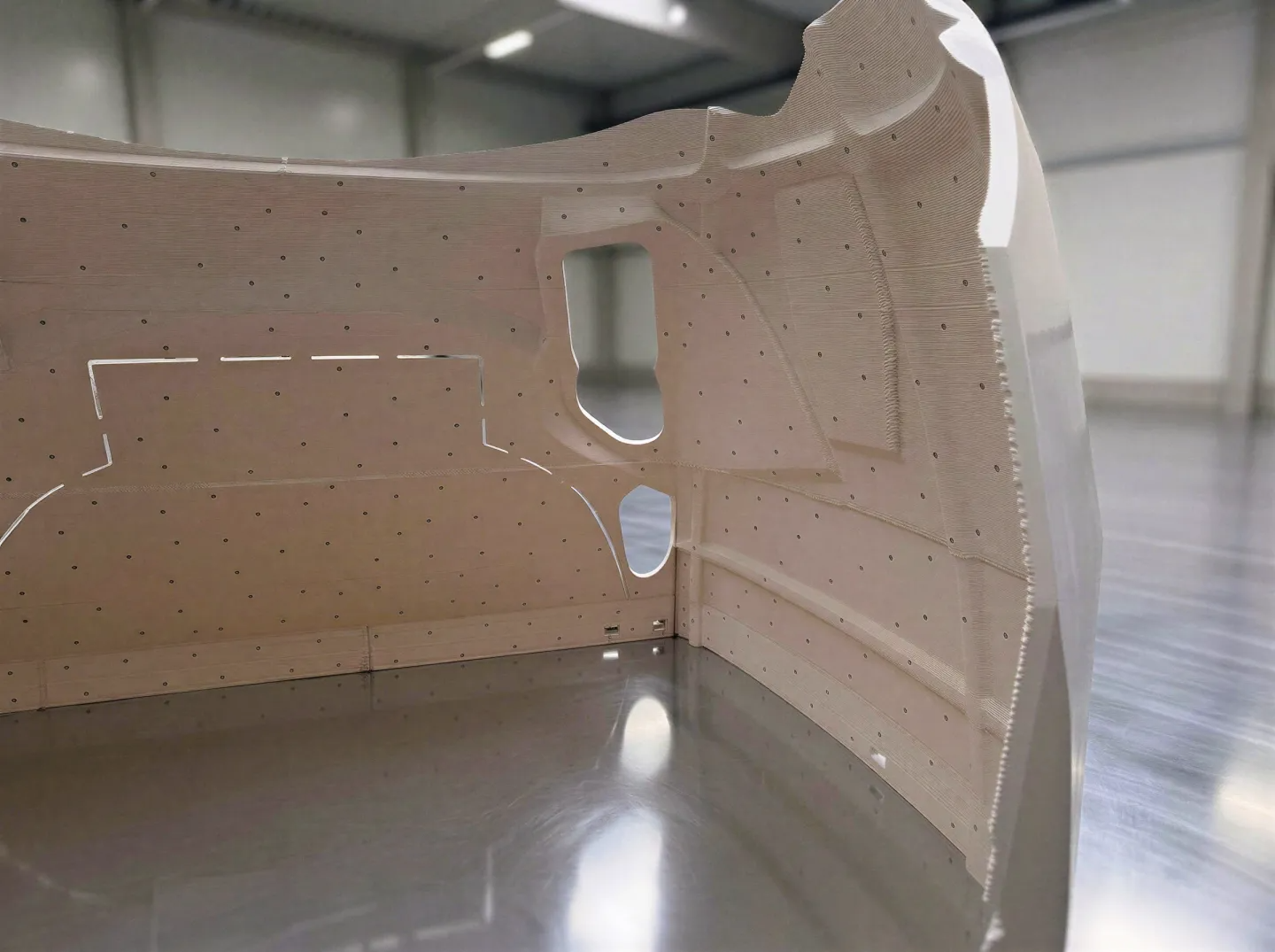
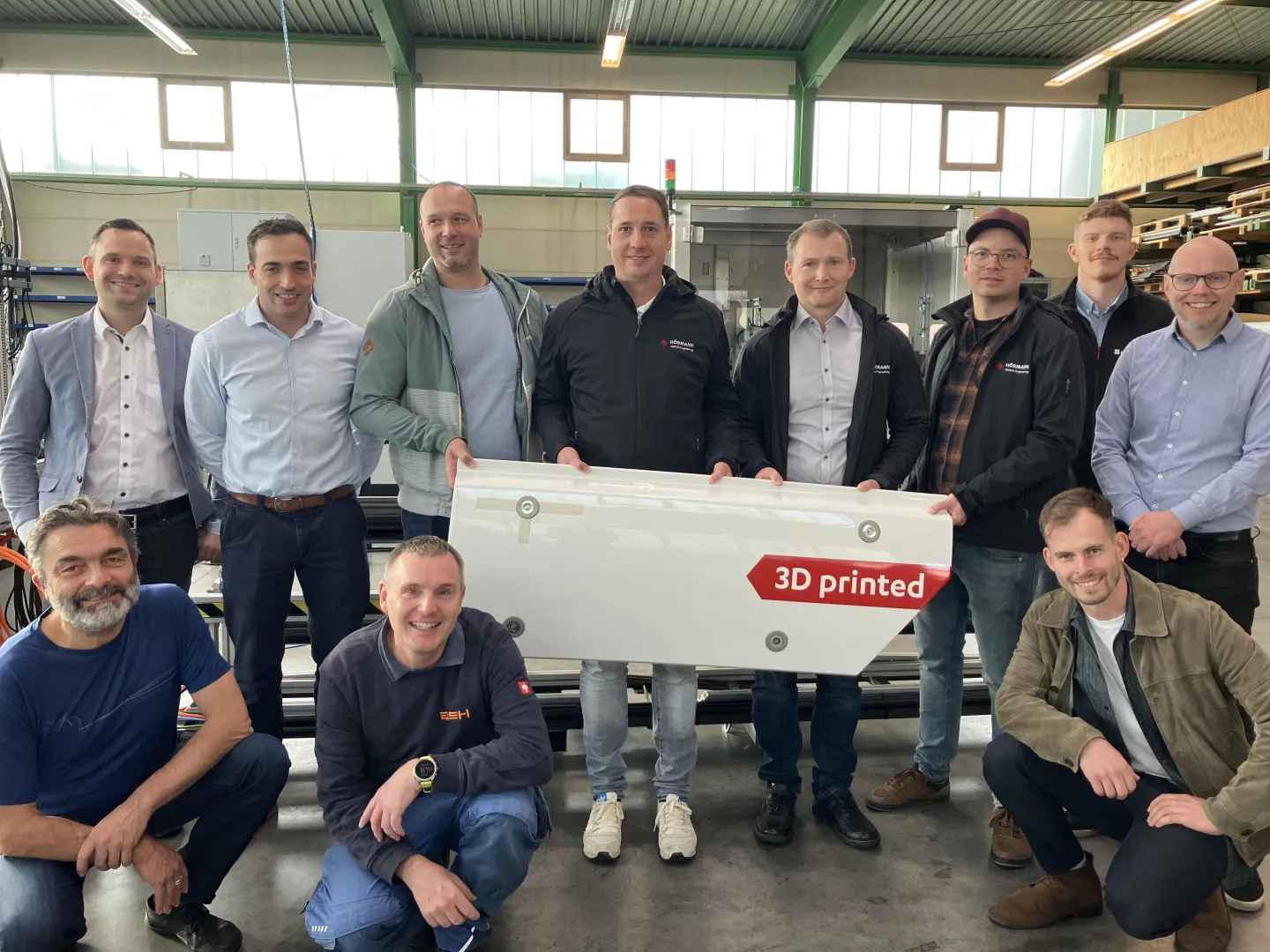
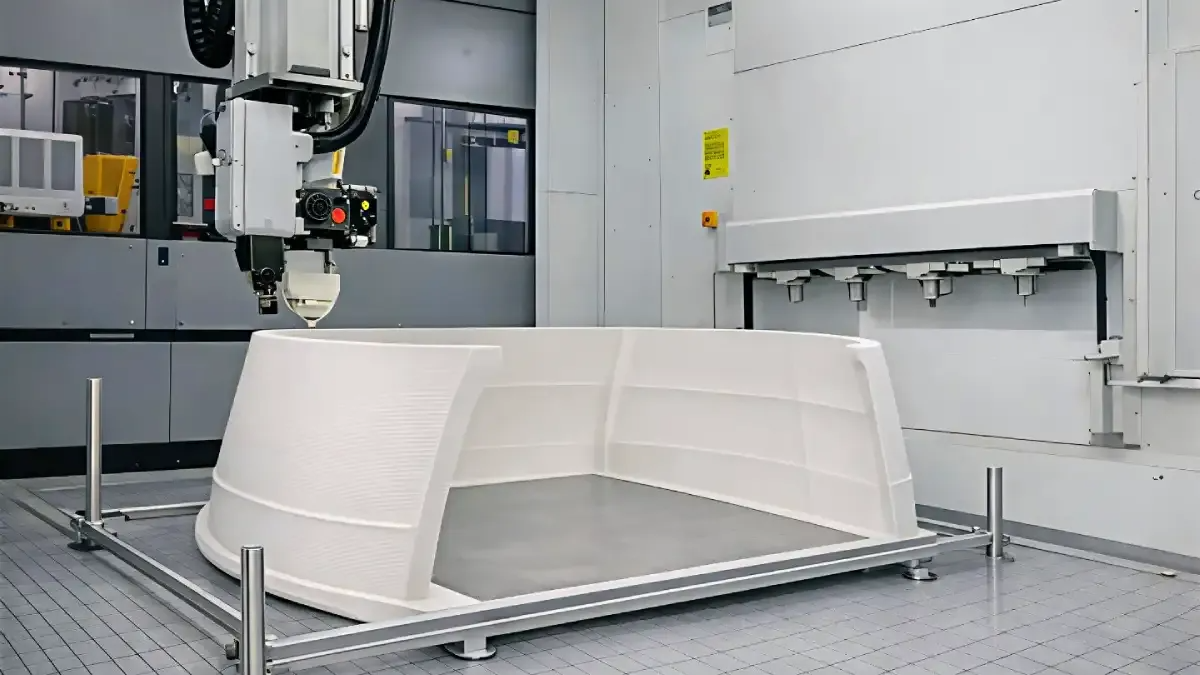
Credit: Fraunhofer IWU, HÖRMANN Vehicle Engineering GmbH
As this process chain was developed, the Velaro MultiSystem high-speed train (ICE 3neo, Class 408) from Siemens Mobility GmbH (operating speeds of up to 320 km/h) served as the reference platform. The process chain was then leveraged to manufacture the nose and the front skirt in a bid to validate the technology.
According to the consortium, the 3D printing-powered value chain yielded reduced manufacturing costs - especially for small and medium production runs - and reduced the carbon footprint. It also eliminated tooling and afforded quicker design iterations.
HVE served as the consortium leader throughout the project and defined the requirements, the design specification, and the structural validation of the demonstrator components. It was supported by Fraunhofer IWU (Upper Lusatia Plastics Center, Zittau), Fraunhofer IMWS (Schkopau), Lakowa GmbH (Wilthen), and Siemens Mobility GmbH (associated partner).


